Mastering Miami Beach Building Inspections: Expert Tips and Tricks

miami beach building inspection guide
miami beach-Building-recertification-guide

The Miami Beach Inspection program also known as the Miami Beach Building Safety Inspection program is a type of inspection that must be completed after a building reaches a certain age. This can be after 25 years or 30 years depending on how far you are from the coast. 

Most of Miami Beach is near the coast so chances are you will need to complete this inspection after 25 years. The recertification program ensures that several components including the structural and electrical systems of your building are safe for use. Our Building Inspectors are happy to help you complete your Building Safety Inspection. We have completed thousands of inspections across South Florida and would be happy to answer any questions you might have. 

Why is there a Building Safety Inspection program in Miami Beach?

Although there were new Building Inspection laws put in place by Florida after the collapse in Surfside, Florida, South Florida has always had a building safety inspection program in place. These programs ensure that the critical infrastructure of a building is safe and suitable for use. These programs help save lives by holding building owners accountable and making sure the necessary repairs are not overlooked if they are needed. 

DoES MY BUILDING IN MIAMI BEACH REQUIRE A BUILDING INSPECTION?

Any Building located in Miami Beach that is 3 stories or more is required to complete a Building safety inspection also known as a Building recertification or 40 year inspection. The 40 year inspection program was originally designed in 2005 and continues to be a mandated law that Miami Beach Building Owners must abide by.  

Typically, if your building is required to complete one of these inspection then you will receive a notice from the Miami Beach building department letting you know your inspection is due. However, if you did not recieve the letter you are still required to complete the inspection. The best way to be sure is to call the Miami Beach building department and verify.

What buildingS in Miami Beach are not require to complete a Building Safety Inspection?

The only buildings in Miami Beach that are exempt from the building safety inspection program are the following:

  • Schools under the jurisdiction of Broward County School Board
  • 1 to 2-story family dwellings
  • Government buildings
  • State of Florida buildings
  • Buildings built on indigenous tribe reservations
  • Buildings under 3500 square feet

Who can perform the Miami Beach Building Safety Inspection program?

Only a certified professional engineer or architect can conduct perform a Milestone Inspection or Building Safety Inspection program. Our engineers can provide you with a detailed analysis throughout the inspection. They are well versed in current Miami Beach Building department regulations. 

A professional engineer will look to verify the structural, electrical systems, as well as conduct a parking lot illumination and guardrail inspection.  For the structure portion of the inspection, the engineer will verify the foundation, roofs, masonry bearing walls, flooring and roof systems, steel and concrete framing systems, and windows and doors are all in a safe condition. 

For the electrical inspection, they will verify that all of the electrical components of your building are safe and will not cause harm to the inhabitants of a building. 

What are the phases of the MIlestone Inspection

There are two phases to the Milestone inspection. In Phase One the engineer will conduct a quick visual inspection of the buildings and decide whether you have any damages that need to be further inspected. If no damage is found in Phase One you will not need to proceed to the second phase. 

If the engineer finds any issues during the Phase One inspection then you will need to move on to Phase Two of the Milestone Inspection. Phase two of the inspection is a more comprehensive analysis which may include removing additional material aka destructive testing. Whether the engineer removes any concrete from the damaged are is ultimately up to the actual engineer doing the inspection. 

What to do once you complete your Miami Beach building inspection?

After you have completed the Miami Beach Milestone Inspection, a comprehensive report we be compiled by the engineer with details regarding the inspector’s findings. Most engineering companies will not submit the completed inspection for you so you will need to sumbit the report yourself in order to avoid any fines from the Miami Beach building department. 

What if i already completed the Miami Beach 40 year building inspection?

If you own or manage an older building, chances are you already completed a 40-year inspection on your building in Miami Beach. If that is the case you can proceed with the subsequent inspection schedule every 10 years. However, there is an additional inspection required now called the SIRS Study. Short for Structural Integrity Reserve Study the SIRS is another inspection that analyzes your Buildings condition and calculates an estimated cost to maintain and repair your Building. This program was put in place to ensure that Building Owners, Property Managers, and associations can have the required funds in reserve when the repairs are required. 

Last thoughts on the Miami Beach Building Safety Inspection program

If your building is more than three stories or more and is 25-years or older you will be required to complete a milestone inspection. If it is more than 3 miles from the coast then you will have an additional 5 years before being required to complete the inspection. 

Most likely the Miami Beach building department will mail you notice, but you should always check with them around this time just to be certain whether or not you need a building inspection done. Not completing the inspection process and recertification in time may cost you fines, legal fees or, in the building department decides your building is unsafe a possible demolition of the structure.

Proactive Building Maintenance Guide: Saving Time and Money

building maintance guide
proactive building maintenance guide

Proactive Building Maintenance Guide: Saving Time and Money

In the realm of property management, the adage “an ounce of prevention is worth a pound of cure” holds true. Proactive building maintenance is not just about fixing problems when you are required to do a Building Inspection or as they arise; it’s about preventing your building from having to do major repairs in the first place. By adopting a proactive approach to maintaining your structure, building owners and managers can save both time and money while ensuring the longevity and efficiency of their properties. As Building Inspectors and Building restoration experts we have seen major differences when building owners frequently maintain their buildings. 

Reduced Repair Costs Associated with Building maintenance

One of the most significant benefits of proactive maintenance is the reduction in repair costs. By addressing minor cracks and concrete spalling issues before they develop into major problems, building owners can avoid expensive repairs and replacements.

Due to the proximity of the ocean, South Florida buildings are subject to the harsh corrosive “salt-air molecules” wreaking havoc on concrete pillars, columns, balconies, staircases, and more. For example, a building might have a small crack on the exterior of the building. That small crack can cause a slight bit of salt to penetrate inside and reach the rebar which is what keeps the concrete structure stable. This causes the concrete surrounding the rebar to rust which in turn pushes the concrete outward and causes it to spall. Furthermore, you do not need a crack for the salt air to enter. Concrete is inherently porous, and a surface without a proper coat of paint is left unprotected. We wrote an entire article about Concrete Spalling if you are interested.

If caught early, the surrounding concrete can be chipped away and the rust can be removed. Once all of the rust is removed we apply a rust-proof coating that further protects it from getting rusted again. After that, the concrete is applied over it as well as a finishing coat. That is the end of that problem and the repair will last for a very long time.

This also helps you save money when your building is up for its 25-year building safety inspection. If you have kept up with the repairs and fixed any spalling or cracks then you will not need to rush to get everything repaired on your next milestone inspection.

Extended Lifespan of Building Components

Regular building maintenance helps extend the lifespan of a building’s structural components. By keeping the facade of your building structure painted and free from concrete spalling, and properly maintained, building owners can prevent large-scale repairs, corrosion of structural components, and deterioration in the long-term. 

For instance, routine roof inspections and repairs can prevent leaks and water damage, prolonging the lifespan of the roofing materials and preventing costly structural damage to other components inside of a building.

Improved Energy Efficiency of your building

Proactive maintenance can also save you money by improving the energy efficiency of your buildings, resulting in lower utility bills. Regular maintenance of HVAC systems, lighting fixtures, and insulation can help identify and address energy-wasting issues such as air leaks, inefficient equipment, or outdated lighting technologies. By optimizing energy efficiency, building owners can reduce operating costs and improve the overall sustainability of their properties.

Minimized Downtime and Disruptions

Unexpected structural failures or electrical malfunctions can lead to costly repairs or even even worse, a collapse such as the one that occurred at Champlain Towers in Surfside. This tragedy caused chaos for a lot of families and could have easily been avoided with an ounce of prevention. Although this was an extreme case, keeping your structural components up to date can also save costly downtime and disruptions for tenants or occupants living in the building. 

Proactive maintenance helps minimize the risk of unplanned downtime by identifying and addressing potential issues before they cause major disruptions. By scheduling maintenance activities during off-peak hours and planning for equipment shutdowns in advance, building owners can minimize disruptions to operations and maintain tenant satisfaction and safety.

Enhanced Safety and Compliance

Regular building maintenance helps ensure that buildings comply with safety regulations and codes, especially when it comes to reducing the risk of accidents or injuries. By inspecting the structural components, electrical systems, fire detection systems, emergency lighting, and exit routes, building owners can create a safer environment for occupants and reduce the risk of liability. 

Last thoughts on how preventive maintenance can save you money and time

In conclusion, proactive building maintenance offers numerous benefits for building owners, associations, and building managers, including reduced repair costs, extended lifespan of building components, improved energy efficiency, minimized downtime and disruptions, and enhanced safety and compliance. By investing in preventive maintenance, building owners can save both time and money while ensuring the long-term success and sustainability of their properties.

Davie Building Inspections: A to Z Guide

davie building safety inspection guide
davie building inspection guide

If you have owned or managed Buildings in Davie for several years then you are probably familiar with the 40-year inspection as part of Davie Building Inspection requirements. Well after the tragic collapse of the Champlain Towers South in Surfside last year much has changed regarding Davie Building Inspections and recertifications. On May 2022, a new Senate Bill was passed called 4D also known as (SB4D). The new legislation is focused on improving building safety and maintenance standards throughout Florida. In this article, we will discuss the changes to the new condo laws in Florida and how they affect Building Inspections in Davie, FL. Our Davie Building Inspectors would be happy to help you with any questions you might have regarding these inspections.

new regulations for building and Condo Inspections in Davie

Davie has always had a Building Inspection program known in the biz as the 40-year inspection or 50-year inspection program. Building Managers, Homeowners associations, Building Owners, and property management companies in Davie are likely to be very familiar with this old program. So what has changed in the Davie Building Inspection program? Well, for starters the name has changed. As stated earlier the program was referred to by industry professionals as the 40-year inspection because it was required after your Building turned 40 years old.

The new program is referred to as BSIP which is short for Building Safety Inspection Program. Under the new Davie Building Safety Inspection program you are required to complete your first inspection after 25 years instead of 40. Once you have completed the 25-year inspection in Davie then you do not have to go through the process again for another 10 years. The 10-year inspection which is to be completed after your first inspection remains the same. Under the 40-year inspection, you were required to follow this 10-year inspection process in the same manner. 

Along with the name change and requirements for your building’s first inspection, another requirement was implemented. A new program called the Structural Integrity Reserve Study or SIRS for short was introduced. This additional requirement was added to the list of requirements and is another inspection that looks at the existing condition of your building and calculates the estimated cost to maintain or repair any damage that can occur to formulate a reserve of funds. This ensures that Building Owners have sufficient funds in reserve to keep their building safe and up to date.  You can learn more about this program on our Structural Integrity Reserve Study page. 

Does my building in Davie require a Building Safety inspection?

The Davie Building Safety Inspection program is required by all buildings in Davie, FL which are 3 stories or taller and have at least 3500 square feet. The Davie Building Department will likely send you a letter in the mail letting you know when your building is due for inspection. One thing to note is that you are responsible for getting your Davie Building Safety Inspection done in time. If you don’t receive the letter because your mailing address has changed or for any other reason then you will still receive penalties or fees for not getting the inspection done in time. 

These fees start from $500 a day so it is important to contact the Davie Building Department to ensure whether your Building requires the inspection and when it is due. We have provided the contact information for the Davie Building Department below to make it easy for you to contact them. 

davie building department logo

Davie BUILDING DEPARTMENT

8800 SW 36th Street,Town of Davie, FL 33328

954-797-2066

[email protected]

Hours

7:30am-5:30pm M-T

What if I already completed the Davie 40 year Building inspection?

If you manage or own an older building in Davie then chances are you have already completed a 40-year inspection. If you have then you can continue with the previous 10-year milestone inspection requirements. So 10 years after your last inspection you will need to repeat the process. One thing that is new and will be required moving forward is the Structural Integrity Reserve Study. This new Davie SIRS requirement will be crucial to know what your projected maintenance and repair cost will be and ensures you or your management company has sufficient funds in place to carry out these repairs. 

What buildings in Davie do not require a Building Safety Inspection?

There are some buildings in Davie that are exempt from having to complete the Building Safety Inspection. (BISP). Here are all the Buildings in Davie which do not require the inspection:

  • Any buildings under 3500 square feet
  • US government buildings
  • State of Florida buildings
  • 1 or 2-story buildings
  • Schools under the jurisdiction of Broward County School Board
  • Buildings built on indigenous tribe reservations

Who can perform a Building Safety Inspection in Key Biscayne

There are only two types of professionals that can carry out these Building Safety Inspections in Davie. To be qualified to perform these inspections you must be a Florida licensed Engineer or a Florida licensed Architect. The Building Safety Inspection report must be signed and sealed by these professionals to get approved by the Davie Building Department. These professionals can conduct and certify your building complies with Davie’s new guidelines. The certified professional will look to verify the integrity of the structural and electrical systems of your building.

What happens after your Davie building inspection is complete?

Once your building has completed the Building Safety Inspection process and an Engineer has signed and sealed the report you can now submit your building inspection report to the Davie Building Department. If there were issues found in the structural or electrical components of your building then you will need to submit the report to the Davie Building Department to get an extension. You will then get an extension on your inspection due date to address the issues and pull the permits required to start on the repairs. 

If no issues were found during the building inspection then you can submit the signed and sealed report to the Davie building department and you will not need to complete the inspection process again for another 10 years. 

You must submit the signed and sealed report as soon as you have it to avoid any fees. Davie usually gives you 90 days to complete the inspection but if you forget or don’t submit the report in time they may require you to redo the process. 

Final thought on the Davie Building Safety Inspection program

The Davie Building Safety Inspection program is a public safety program that will help ensure that buildings are safe for occupancy. It may seem like a nuisance but it benefits building owners and managers by reducing legal risks as well as reducing the chances that you will need to completely overhaul your building.

Doing proactive maintenance on your building limit the chances that you will have structural issues and you will be able to identify the problems before they become a severe issue that can cost you thousands of dollars. The tragedy that occurred in Surfside cost the lives of many and could have been prevented by completing these inspections.

Mastering the Craft: A Guide to Building Restoration Specialists

south florida building restoration specialist
building restoration specialist contractor

In the realm of construction and engineering, there exists a specialized field that combines engineering expertise with construction knowledge: building restoration. As engineers deeply entrenched in the construction industry, We have taken on the pivotal role of building restoration specialists. With a unique blend of engineering expertise and contractor know-how, we have played a crucial role in preserving architectural heritage, reviving historic structures, and breathing new life into Florida’s aging buildings. 

In this article, I’ll delve into the multifaceted world of building restoration, shedding light from the perspective of an engineering company who are also contractors that specializing in Building restoration.

Why are building restoration specialist so crucial to South Florida

After the collapse in Surfside, Florida had a big wake-up call. This was a tragic event where many people lost their lives due to problems with the structural integrity of the building. South Florida is one of the most beautiful cities in the world thanks to it’s proximity to the ocean but there is a dark side to this beautiful city. The amazing oceans are also the cause of many of the structural problems that buildings have to endure. 

If you have been around the water for a long time you know that the salt from the oceans is incredibly corrosive and will completely dissolve metal if it is exposed for long periods. Well, this is what happens to buildings in South Florida. Due to evaporation the salt molecules become suspended and start to accumulate around the Building. 

A small crack in a wall can cause some of the salt to penetrate inside and corrode the structural rebar beneath. This creates a corrosive layer over the rebar which in turn starts to expand the concrete. After some time the concrete can not take it anymore and breaks. This is what concrete repair specialists call spalling. Once the concrete has been compromised the salt ions in the air can easily penetrate any exposed rebar and it’s all downhill from there. 

This is why you should call a Building Restoration Specialist at the first sign of spalling. If you can get the spalling fixed right away it will minimize the cost of restoring your building. This is also why the Florida Building Safety Inspection program was put into place. Although it might seem like a nuisance it is also beneficial to the building owner. Checking your building every couple of years actually saves you money in the long run so that the damage does not get out of control and can be repaired. 

Navigating Technical Challenges IN BUILDING RESTORATIONS

Historic Buildings are not the only Buildings that need restoration. As a matter of fact many of Florida’s buildings need to be restored which is why the Florida Building Safety Inspection program was created. In the first phase of the program, a Professional Engineer or Architect provide a visual inspection of a building and determine whether it needs to be further inspected. 

Due to our extensive experience in Building Recertifications in South Florida we have seen it all. We have also repaired many buildings in Florida and have overcome many of the hurdles required when restoring a building.  As concrete repair specialist and structural inspectors we have seen both sides. On inspection side we have seen common areas where buildings fail and can spot damages quickly. On the construction side of things, we have developed many techniques to overcome the challenges of repairing an old building. Here are some of the problems that can occur when restoring a building. 

SOUTH FLORIDA HISTORIC BUILDING REPAIRS

Out of all Building Restoration, Historic Buildings are the most complicated. Many of the materials and techniques used to create these magnificent structures are no longer in use. Due to their Architectural Legacy and historic significance, they require a delicate repair to preserve it as it once was. Many building departments also require the exterior of the facade to remain the same. This means that after all the repairs are done the building should still look exactly how it used to when it was first built. This presents many challenges and is one of the reasons historic building restorations are so costly. 

BUILDING RESTORATION INSIDE OF COMMUNITIES

When developers are building out a modern community they usually create all of the buildings to look identical. This saves cost and time by replicating the same building over and over again and also gives the community a uniform look. However, when it comes to repairing these buildings, many associations or Building management groups require the repairs to not change the way the building looks. We have encountered this in the past when the balconies of buildings were built with a technique that is no longer in use. This presents a big challenge for the contractor completing the repairs. Trying to match the style of a balcony guard rail that is in a complicated shape can be very costly. 

Restoring buildings in busy neighborhoods

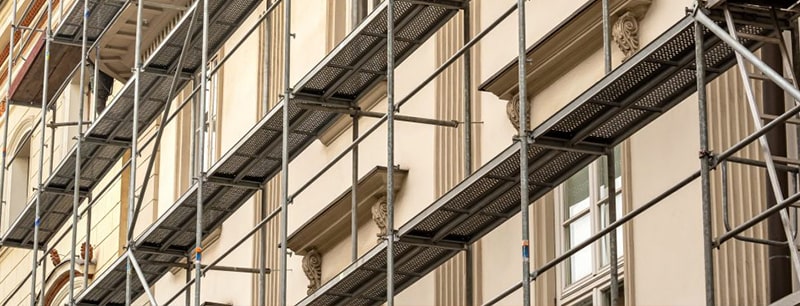
Some buildings are located in very busy areas. This presents a challenge for the building repair contractors. In order to repair the exterior of a building it must be made safe so that none of the construction materials fall and potentially hurt someone. This is why many times you see nets that are put up around a building in order to keep the surrounding area free from falling debris. 

BUILDING RESTORATION NEAR THE OCEAN

If your building is located on the water or near it, special care must be taken to ensure that none of the debris from the construction falls into the ocean and pollutes the sea. City Inspectors are always looking our for this and can give you a hefty fine if they see that your construction job is polluting the surrounding ocean or lake. 

What makes a building restoration specialist

There are many factors to consider when hiring a building restoration specialist. How much experience do they have? What projects have they worked on in the past? Do they have experience repairing old buildings? Do they pick up the phone when you call? What do customers say about the company? Do they have any references to customers that have used their service? 

These are all questions you should be asking before hiring a building repair company. Our team of engineers and contractors have more than 100 years of combined experience in Building Inspections, Concrete Repair, and most Building Repairs. We have worked on everything from historic buildings to newer buildings that tried to cut costs and ended up having to repair the buildings. 

If you are looking for a building restoration specialist feel free to give us a call. We are always happy to help you and answer any questions you might have regarding your Building restoration. 

Broward County Building recertification guide

broward county building recertification guide
Broward County Building recertification guide news

The Broward County Inspection program is a process in which buildings that reach an age of 25-30 years require recertification. The recertification program serves to attest to the structural integrity of the buildings located in Broward. This is a program mandated and enforced by Broward County and the purpose of the program is to ensure safety for all occupants of the building; whether it’s a residential or commercial building.

By reviewing this article on the Broward County Inspection Program, you will be able to ensure you are informed on the recertification process, the significance of the program, and the implications of the program. We also have more information regarding the Broward Safety Inspection program on our services page.  Let us be your Broward County Building Inspector in Broward County for your next Building Safety Inspection. 

Why is there a Building Safety Inspection program in Broward?

After the collapse in Surfside, Florida took a crucial step towards enhancing building safety. Nevertheless, in counties such as Miami-Dade and Broward, several of these safety requirements were already being enforced. To further strengthen preparedness, South Florida counties implemented essential modifications.

Do I need an inspection for my building in Broward?

This inspection program was originally designed in 2005 and is fully in effect for all of Broward County. The purpose of this program is to ensure structural and safety compliance for buildings 25 years and older.

Broward mandates recertification at 25 years of age of a building; regardless of its distance from the coast. And it will need to be recertified after an additional 10 years. 

The program will effectively help reduce the number of any instances endangering the building and its occupants. 

Typically, you will receive a notice for an inspection once your building is reaching its 25 years of age. However, even if you do not receive your letter, it is still your responsibility to complete your inspection.

What building in Broward do not require a Building Safety Inspection?

You are only exempt from the program requirements if your building is:

  • 1 to 2-story family dwellings
  • US government buildings
  • State of Florida buildings
  • Schools under the jurisdiction of Broward County School Board
  • Buildings built on indigenous tribe reservations
  • Any buildings under 3500 square feet

What does the Broward Building Safety Inspection program consist of?

Only a certified engineer or architect can conduct and certify your building complies with the county’s program. The certified professional will look to verify the structural and electrical systems.  For the structure, they will verify the foundation, roofs, masonry bearing walls, flooring and roof systems, steel and concrete framing systems, and windows and doors are all in a safe condition. For the electrical inspection, they will verify the electric service, branch circuits, conduit raceways, and emergency lighting are in a safe condition and compliant with the program. 

Phase Two of the Milestone Inspection is triggered only in the event of discovering damages, deficiencies, or any building concerns during Phase I. In such cases, your local city department will grant an additional 180 days for completing the necessary repairs. Subsequently, a follow-up inspection is required to ensure that any identified structural or electrical issues have been effectively addressed, certifying that your building is in a secure and optimal condition.

What to do once you complete your building inspection?

After the completion of the Milestone Inspection, a comprehensive report detailing the inspector’s findings will be provided to you. It is imperative that you personally submit the full report to your building department, as the inspector does not undertake this responsibility on your behalf. Ensuring compliance rests on your shoulders, and it is your duty to submit the report within the specified timeframe stipulated by the city.

Final thought on the Broward Building Safety Inspection program

If your building stands at three stories or more and hits the 30-year mark, it mandates a milestone inspection.

Upon reaching this milestone, the city building department will dispatch a notice, prompting you to conduct the required inspection and submit the ensuing report.

Yet, in the absence of a formal notice, the responsibility remains on you to ensure adherence. Neglecting the inspection process and recertification may result in facing liability fees or, in extreme cases, the demolition of the structure.

Should deficiencies or deterioration be detected, Phase II of the Milestone Program comes into play. During this phase, the building is granted 180 days to rectify and repair identified issues before undergoing a comprehensive re-inspection. If you want to learn more visit the Broward Building Safety Inspection page for a more comprehensive guide on what is required.

The ultimate guide to hiring a Building Inspector in South Florida

south florida building inspectors guide
south florida building inspector explained

The ultimate guide to hiring a Building Inspector in South Florida

When considering hiring a Building Inspector in South Florida there are many things to consider. Whether you are a property manager, building owner, association manager, real estate investor, or an estate manager these tips will help you understand what a building inspector is and the different types of inspectors you can hire in South Florida. 

Whether it’s a residential building or a commercial building, making sure you hire the right inspector is a crucial decision. When you hire a building inspector you are trusting them to ensure the property is structurally sound, safe, and meets all necessary codes and regulations. In South Florida, where factors like weather and construction standards can vary, finding the right building inspector is crucial. This comprehensive guide will walk you through the process of hiring a building inspector in South Florida, ensuring you make an informed decision that protects your investment.

Understand the Role of a Building Inspector

Before we dive into the hiring process, it’s crucial to understand what exactly a building inspector does. A building inspector can evaluate the structural integrity, safety features, and adherence to local building codes and regulations of a property. They inspect various elements, including the foundation, electrical systems, plumbing, roofing, and more, to identify any issues or potential problems. Some inspectors such as Engineer Building Inspectors are required if you need signed and sealed plans. You can hire an inspector to look at a small crack in a column or use them to complete a Building Safety Inspection program for your entire building. 

What are the different types of Building Inspectors in SOuth Florida?

Not all building inspectors are qualified to conduct every type of inspection. When looking to hire a Building Inspector it is important to understand the different qualities and qualifications they may bring to the table. If you do a quick Google search for “Building Inspector”, you will find hundreads of companies in South Florida that can inspect a building but not all of them can carry out specialized inspections like Building recertifications. 

Home BUILDING INSPECTORS

Most of the companies you will see online offering home building inspections will have a Building Inspection certification. This is an exam given by the Florida Building Code Administrators And Inspectors Board which is a part of the Florida Department of Business & Professional Regulation

To take this exam you must meet certain qualifications:

  • A total of four (4) years of experience in construction or a related field, building code inspection, or plan review in your desired certification category as per 468.609(2)(c)(1), F.S.
  • A combination of postsecondary education in the field of construction with hands-on experience amounting to three (3) years, with at least one (1) year of that experience in construction, building code inspection, or plan review, as per 468.609(2)(c)(2), F.S.
  • A combination of technical education in the field of construction or a related area and practical experience of three (3) years, of which at least one (1) year involves construction, building code inspection, or plan review as per 468.609(2)(c)(3), F.S.
As you can see to become a simple Building Inspector you do have to have a good amount of experience and Education in Construction. Some South Florida Inspectors have been in business for over 20 years and have extensive experience in the field. Many Inspectors were previously General Contractors or have been in the industry for a long time and have a deep understanding of the inspection process. Now let’s move on to another type of inspector.

Engineer BUILDING INSPECTORS

Another type of Building Inspector is an engineer. To become a Professional Engineer you are required to complete a four-year degree in engineering as well as take two rigorous state exams, one for the FE license and one for the PE license. After all, engineers are the ones who calculate dimensions, material compositions, and strengths, and design many of the things we see and use every day.

Besides the four years of college, the most difficult part of becoming a professional engineer in Florida is the state exams given by the Florida Board of Professional Engineers. There are two Engineering Exams you are required to pass. Fundamentals of Engineering (FE) exam and the Principles & Practice of Engineering (PE) exam, include information on registering for them and what you can expect.

Once you pass the two exams you can become a professional engineer. Once you have the license you are held to a professional standard of conduct by the Florida Board of Engineers. Just like the Florida Bar regulates lawyers in Florida the FBPE regulates Engineers. As you can see an Engineer who is also a Building Inspector has much more knowledge and has to complete more extensive training than a basic building inspector.

 To add to that, an Engineer or Architect are the only ones who can complete more complicated inspections like the new Florida Building Safety Inspection program. Other structural inspections like a threshold inspection also require signed and sealed plans by a professional engineer.

Which Building Inspector is right for me?

If your Building Inspection, Building repair, Structural repair, or Concrete repair requires signed and sealed plans the answer is simple. You need a professional engineer to be your building inspector. They possess a formal education and understand the complexities of how Buildings are put together and where they can become structurally compromised. When you hire a structural engineer as your Building Inspector, they put their name on the line, putting their professional license and reputation on the line to ensure your building is safe. 

Final thoughtS on South Florida Building Inspectors

We went over the roles of Building Inspectors, the types of Building Inspectors, and the education required to become a South Florida Building Inspector. Depending on the type of Building inspection you need, is how you will determine the kind of Building Inspector you should choose. One thing is certain before choosing a building inspector you should do your research and make sure the inspector has the qualifications to complete your building inspection.  

Miami Dade Building Recertification Guide

miami dade building recertification guide
Miami Dade County Building recertification guide news

The Miami-Dade County Building Safety Inspection program is a process in which buildings that reach an age of 25-30 years require recertification. The purpose of the recertification program is to make sure the structural integrity of the buildings located in Miami-Dade is being made. This is a program mandated and enforced by Miami-Dade County and the purpose of the program is to ensure safety for all occupants of the building; whether it’s a residential or commercial building. 

By reviewing this article on the Miami-Dade County Building Safety Inspection Program, you will be able to enhance your knowledge and expertise in the recertification process. We no how complicated City of Miami Dade inspections can be which is why we make it easy for you! The City of Miami 40 year recertification has now been changed to the Building Safety Inspection and in this article we will explain all the new changes. Call the number one Building Inspector in Miami today! A property inspector from our team can answer any questions you have about the inspection process. 

You can also find a link below to the Miami-Dade County 40 year recertification forms now known as the Building Safety Inspection forms. However if you hire us as your Miami-Dade building inspector we will take care of getting the right forms filled out for you so that all you will need to do is submit the Miami-Dade County Inspections results. Although the name may have changed from 40-year inspection in Miami to Building Safety Inspection many of the requirements remain the same. If you would like to learn more about the new Miami-Dade Building Safety Inspection program you can read more below.

Why did Florida's Building recertification program change?

Following the Surfside condominium collapse in June 2021, when over many people lost their lives, Florida rolled out a new building safety inspection program. However, in Miami-Dade County, many of these requirements were already in effect. The City of Miami 40 year recertification program needed to be adjusted after the collapse of the Champlain Towers. 

Although there were some changes regarding the frequency of these inspections the requirements of the Miami-Dade Building recertification/inspection program already fulfilled all of the requirements that are required by the new program along with additional inspections that are only required by the Miami-Dade building department. To bolster preparedness, South Florida counties made necessary changes. You can also view our services page or visit the Miami-Dade County inspections page for more info regarding the process and requirements. 

What if I already completed The City of Miami 40 year recertification?

If you have already completed The City of Miami’s 40-year recertification then the requirements remain the same except for some new changes that were added when Senate Bill 4-D was passed. You are still required to complete the structural inspection and electrical inspection as well as the guard rail inspection and parking lot illumination inspection. If you are currently following the subsequent inspection schedule of completing your inspections every 10 years you can continue with that schedule.  The 40 year recertification Miami had in place was already very comprehensive and covered the two most crucial elements of a building. 

The main change to The City of Miami’s 40-year recertification is the addition of the Structural Integrity Reserve Study. The SIRS Study is a new inspection that must be completed which provides you with a visual inspection of your building condition. The Building Inspector will visually examine your building and calculate the estimated cost of repairing and maintaining your building in the City of Miami. This will allow property managers, associations, and building owners to have the funds available when the time comes to complete these repairs. 

What is inspected during the city of miami dade Building inspections?

The City of Miami inspections are used to determine and examine the structural and electrical integrity of your building. A certified engineer or architect is qualified to determine it and they will look at many areas of your building. Such areas include the foundation, any masonry bearing walls, steel, wood, concrete framing systems & electrical services such as the fire safety system and electrical panels. These areas are important whether you have a building that’s commercial or residential commercial. Miami dade building department inspections can be complicated but were are experts in the field and are always happy to help you.

How do I know if I need a recertification for my building in Miami-Dade?

In Miami-Dade, buildings constructed in 1982 or earlier will continue to adhere to City of Miami 40-year inspection program. For structures three stories or taller built between 1983 and 1997 within three miles of the coast, a recertification inspection is required by December 31, 2024, and subsequently every ten years.

Buildings beyond three miles from the coast and constructed between 1983 and 1992 must undergo inspection by December 31, 2024, and repeat the process every ten years. If a building is three stories or taller within three miles of the coastline, constructed on or after 1998, it must undergo recertification inspection at 25 years and every ten years thereafter. Other buildings have until they reach 30 years, followed by inspections every ten years.

Miami-Dade requires recertification once the building reaches 30 years of age if the building is within 3 miles of the coast and 25 years if it’s 3 or more miles farther from the coast.

What buildings in Miami-Dade are exempt from the Building Safety inspection program?

Notably, certain buildings are exempt from these requirements, including U.S. government buildings, state of Florida buildings, Indian reservations, school buildings under the county school board, one or two-family story buildings, fee-simple townhouses, and minor structures under 3500 sq ft.

How to submit your Miami Dade Building Dept inspections?

Following the conclusion of the Milestone inspection, you will be furnished with a detailed report encapsulating the inspector’s findings. It becomes imperative that you personally submit the entire report to your building department, as the inspector is not tasked with doing so on your behalf. To ensure ongoing compliance, the responsibility lies on you to adhere to the specified time frame for report submission as mandated by the city.

Summary of the Miami-Dade Building inspections program

If your building stands at three stories or more and hits the 30-year mark, it mandates a Building Safety Inspection which meets and exceeds the new requirements introduced with Senate Bill 4-D milestone inspection. Upon reaching this milestone, the city building department will dispatch a notice, prompting you to conduct the required inspection and submit the ensuing report.

Yet, in the absence of a formal notice, the responsibility remains on you to ensure adherence. Neglecting the inspection process and recertification may result in facing liability fees or, in extreme cases, the demolition of the structure.

Should deficiencies or deterioration be detected, Phase II of the Milestone Program comes into play. During this phase, the building is granted 180 days to rectify and repair identified issues before undergoing a comprehensive re-inspection. An experienced commercial building inspector will be able to help make the process of passing your Building Inspection in Miami Dade easy and effortless.

Essential Guide to Commercial Flat Roof Repair

commercial concrete roof repair guide-min
commercial-building-roof-repair-news

Essential Guide to Commercial Flat Roof Repair

In this invaluable guide, we will discuss step by step and in detail every aspect you need to be informed about commercial building roof repairs, from initial damages to preventative damages. By the end of this guide, you will be able to consider yourself a master in construction management and knowledgeable in the field of commercial building roof repairs. 

Commercial building roof repair is one of the most important elements of property maintenance that should not be overlooked. After all, if your roof is damaged and leaking it can cause other structural damages to occur. Over time, several incidents can occur to warrant a repair on your roof; from poor weather conditions to structural deterioration of the building. By remaining proactive, you can prevent and further mitigate any potential damages to your commercial building and thus save yourself time, money, and resources. 

Let’s work together so we can ensure you are informed on the process of commercial building roof repairs and how you can make logical and thoughtful decisions. Commercial flat roof repairs are part of our South Florida concrete repair services. 

Understanding the importance of commercial roof maintenance

Why should you know or care about commercial roof maintenance? This is incredibly important if you are a property owner or manager because the knowledge will determine your level of success and longevity of the roof for your commercial property. You want to ensure you are able to successfully protect your commercial property and preserve its property value, are in compliance with the city building codes and regulations, and you are extending the lifespan of your building. Maintaining the roof of your commercial structure is what will determine your level of success as a property manager or owner. 

What is a commercial roof? Why is it important?

The structure of the roof protects all occupants and objects inside of the building to ensure safety. It allows the occupants and all property to feel secure while living or working in the building. While this may seem like an obvious and common sense; unfortunately, common sense is not so common. Negligence of property maintenance, particularly when it refers to water and moisture is one of the most common reasons for roof failure and roof repairs. Experiencing significant weather conditions is a yearly occurrence; therefore, it is important to recognize why the maintenance of your commercial building and the roof are essential to the success of your building. 

The leading causes for roof damages, failures, and collapses is due to water intrusion. This occurs when water seeps or intrudes through the roof causing damages over a long period of time. This is especially important for South Florida because when there’s water damage, there is likely mold damage. Unfortunately, we cannot see mold damages until it’s quite too late or until a mold inspector opens up the roof to inspect the mold damages. Mold damages can be incredibly difficult to deal with as they cause the breaking down of the roof and building to happen causing significant damages to the structure. The mold can cause health issues for any occupants residing on the top floor of the building as well. 

Saving money by maintaining the roof of your commercial building

By getting involved in a preventative roof maintenance program, you could save yourself thousands to hundreds of thousands of dollars by being proactive. These proactive programs typically include a professional visually inspecting the roof, the cleaning of the roof including any debris removal, and making notices of any deterioration or areas which need immediate attention. Roof construction is probably one of the most expensive and important aspects of your commercial building; thus, requiring meticulous attention. 

The cost of negligence is far greater than actively maintaining your commercial property and could also lead to liability issues in the case where an occupant is injured in the building. You want to ensure you are taking all the necessary and cautionary steps to feel secure in your building.

Conducting a thorough roof inspection

Routine inspections are essential to the maintenance and the structural integrity of your commercial building roofing system. By completing a routine inspection on your commercial building roofing system, you will ensure the longevity and success of your structure. Inspections conducted routinely can help mitigate and prevent any unnecessary financial costs. It is very important to identify and address issues as they arise & ward off any roofing issues. Identifying damages can help decrease the size of your problems on a roof and prevent them from becoming worse. 

You will also want to take into consideration the safety of the occupants of your building and ensure their well being is of the highest importance. There are also many other considerations to take into account such as insurance requirements, preserving the property value, and compliance for your building. You want to ensure you are placing the priority of the building at the highest possible level.

You will also need to get your roof inspected anytime you are completing a Building Inspection

Setting up regular routine inspections

You should always have a plan for anything in life but especially for protecting your commercial building structure and its roof. Regular maintenance is a proactive way of protecting your building and its roofing system. You can do so by:

  • Conducting consistent inspections
  • Proactively check up on the roof
  • Repairing when needed
  • Keep track of everything

Conducting consistent inspections will ensure there are no hidden surprises over the lifetime of your roof. You want to avoid any situations where the roof isn’t inspected regularly and now your building is requiring significant repairs for things like spalling, cracks, and any other deterioration. It’ll also be useful for detecting any water damages such as water seepage or intrusion. 

When managing a building, you want to always proactively manage your commercial building. When people tend to manage their building reactively, they tend to run into more problems than they can feasibly handle. Behaving reactively can lead to significant financial losses on roof repairs, roof replacements, and any other related maintenance costs. By performing your duties as a property owner or manager, as a proactive professional, you can mitigate any of those costs, ensure the safety of your occupants, and extend the longevity of your building. It’s important to have your maintenance team to consistently check up on the roof and clean it for any damages such as clearing out gutters and drains. You can also check for any small leaks that may not be actively leaking as well.

It is always better to repair your roof ahead of time rather than waiting until the last minute possible. The purpose for this is to mitigate your financial costs on your commercial property. If your roof requires repair and the need for the repairs has just been discovered, you can take the first step and repair your roof immediately. By procrastinating, you will only increase the total costs it will take to repair the structure and thus decrease the available allowance the building has available. For example, let’s say you didn’t repair your roof last year for damages but discovered the damages at the time and a hurricane hits now, you may have even more damages. Furthermore, an insurance carrier may decline your claim for the repairs if the damages were pre existing. 

Keeping track of documents is as crucial as the actual work of the maintenance and repairs of your commercial property. You want to make sure for every part of the process you are documenting all of the details and of the work conducted on the roof. It creates a track log showing the entire history of all the work done on the roof. It will show of any damages done such as spalling, cracks, or any deterioration and any actual repairs or steps taken to remedy the issues. It also serves as a legal document and track record showing the damages but also the steps taken when damages were discovered. 

Conducting a visual roof inspection

If you own or manage a commercial building, you can easily access the roof as long as it’s not a steep roofing system. You can easily conduct a visual roof inspection by walking on the face of the roof and visually inspecting any noticeable damages or areas needing immediate attention. Be sure to inspect all different areas of the roof so you can ensure your inspection has been completed thoroughly. 

Check on the gutters and drains

When conducting your inspection, an important area you can start looking at are the gutters and the draining systems. Due to weather conditions, a lot of the time these systems become clogged from outside debris. Check these areas to make sure they’re not clogged. If they are clogged, look to unclog them immediately. The purpose of this is because if they’re clogged and water cannot flow through them properly, water will just sit and collect on the top of your roof and it has no place to go except seep through the roof and into your building. 

Check all areas OF YOUR ROOF

In order to avoid any unnecessary refurbishments, you should check all areas and layers of the roof. This is especially important because it can help identify any missing shingles or parts of the roof that may be damaged which may cause an easy opening for water to enter. If ignored or not properly examined, it can be the difference between spending hundreds of dollars to thousands of dollars. The great benefit about conducting a visual inspection is that they’re fast, relatively inexpensive and easy to complete and allows you to notice any issues so repairs can be conducted quickly. 

Navigating the Commercial Roof Repair Process

Comprehensive Repair Plan

For any project, you should always devise a plan with proper steps and goals you are looking to achieve. Writing out your proposed plan for the repairs will help you organize your goals, your deadlines, and finally conclude the repair process. The repair should serve as an outline for you and your management team to utilize on how to assess any commercial building roofing system repairs. Without a plan, there will be no direct timeline and the scheduling of the materials and repairs can become overwhelming.

Estimated Assessments & The Scope

The proposed repair plan by the construction company such as ours will detail an estimated assessment of the damages and the costs associated with the repairs. It will detail and outline the cost of materials, the cost for labor, any additional inspections during or after the repairs have been completed, and any additional scans made of the commercial roofing system. 

The scope of the work is an outline of the construction project for the repairs completed. It will detail all parties involved with the repairs and it is the written proposal for the contract of the roof repairs. It serves as a statement of work; where the construction company proposes the work involved in order to complete the repairs. It will detail all tasks involved in the project and how each one will be accomplished and the time table for it to be completed. The scope of work will also include drawings of the roof, providing a visual aid of the roof, which areas will be covered in the project including the dimensions. 

Permits and Approvals for Commercial Building roofs

The process of obtaining permits and approvals for completing any type of construction for a project can be a long, tedious, and complicated process. However, it is one process which is the very first step in the repair process. Without the appropriate permits and approvals from the city, no work can be completed on your roof. We can easily understand and navigate through that process by abiding by the following:

Conducting Research for Commercial Building permits

As an engineering and construction company, we prioritize research on your commercial roofing system and identifying the appropriate permits. It is a strategic and meticulous research process. Knowing which permits to obtain is incredibly important as it can save your building a significant amount of time and money in the process. We pride ourselves in our ability to achieve this for you and your project. We look into identifying the requirements and regulations for the project location. 

This typically involves identifying the specific building codes and following the requested permit application process. Through direct dialogue with municipal authorities and seasoned consultants, we gain invaluable insights into the nuances of the permitting process, ensuring we navigate it with confidence and efficiency. Armed with this knowledge, we meticulously compile all necessary documentation, from architectural blueprints to environmental impact assessments, meticulously tailored to meet the stringent standards set forth by regulatory bodies. This proactive and thorough approach not only demonstrates our commitment to compliance but also lays the groundwork for a seamless and successful project execution. Trust us to handle your construction permits with expertise and precision, setting the stage for your vision to become a reality. 

Submitting your application for commercial building roof repair

The next part of the process includes the application process and the submission of the application. After all necessary documentation for pulling the permits has been gathered, it is submitted to the corresponding city. This would include the proposed plans, a notice of commencement of the project, and necessary documentation relating to the engineer and general contractor’s credentials. 

Following up on your commercial roof repair permit

At times, the city building department may be behind on submitted applications. Following up with the city building department is as important as submitting the actual application. Following up on the application allows you to remain informed of the progress of the application and where it stands in the process. It also allows you to address, fix, or provide any additional documentation or information that may be missing or pertinent to the approval of the permit application. 

Inspections during the commercial roof repair process

After the first initial inspection where the scope of work is to be proposed and determined, an additional inspection will occur during the process of repairing the commercial roofing system. The purpose of this inspection is to ensure the repairs have started, the repairs are in line with the agreed upon scope of work based upon the plans and specifications submitted to the city building department, and compliance with the city’s regulations. This ensures repairs are being completed at the construction site of your building. 

Once the construction project has been completed, an additional inspection will take place to ensure the renovation of your building is completed and complies with the city building department. This ensures the repairs were completed, under, the plans submitted to the city and in compliance with the scope of work. Responsible licensed contractors will always update any necessary changes and inform the city building department of such changes.

Maintaining and documenting the permit and approval process

Maintaining documentation of the permit and approval process is especially important because it shows the work being completed and the process of that work. It’s also crucial because it ensures your commercial roof repair project remains in compliance with regulatory requirements and building codes.

As a construction company, it is vital to retain all relevant documentation pertaining to permits and approvals as part of the roof repair renovation. This would be applicable to the permit application and any approvals or modifications made to the original construction plans. Inspection reports should also reflect an illustration of all reports throughout the entire commercial roof repair project. Any deficiencies, findings, or corrective actions taken should be documented as well. 

By developing a comprehensive repair plan and navigating the permitting process effectively, you can ensure that commercial roof repairs are executed smoothly, safely, and in compliance with applicable building codes and regulations. This proactive approach minimizes delays, mitigates risks, and helps achieve successful outcomes for your roofing project.

Common types of commercial roof systems

Before looking into the type of roofing system, we need to know the shape of the roof. Typically, there are low slope roofs and steep slope roofs. There are very different types of each and each roofing system will vary and contain its own characteristics which make it unique in the construction industry. 

Low slope roofs

A low slope roof is one that is not steep and does not contain any shingles on it. You will typically find this style of roofing on warehouses, factories, and shopping malls. The best way to understand the roof is that it’s not very high. It’s a roof that is very low and almost flat.

Steep slope roofs

A steep slope roof is more commonly found in the residential construction industry than it is in the commercial construction industry. The best way to think of a steep slope roof is to understand the roof is steep from its highest point of the roof to its lowest point of the roof where it actually meets the walls of the structure. They will occasionally be found on apartments, townhomes, and hotel buildings. 
Types of commercial building roofs

There are different types of roofs utilized in both the commercial and residential industries each with their own advantages, disadvantages and suitability for different climates, building styles, and budgets. Here are some of the most common types:

TPO(Thermoplastic Polyolefin)

 These roofs are typically found on commercial warehouses or buildings. It’s a low sloped roof and it’s covered with a strong and reinforced sheet. It’s made to cover flat roofs and consists of polypropylene and ethylene-propylene rubber. Those two elements are combined and rolled into sheets where they can be applied to a flat roof. It is considered a cheap but viable option to protect the roofing of a structure. 

EPDM Roofing(Ethylene Propylene Diene Monomer)

is another style of roofing applied in low slope buildings. It’s resilient, cost effective, and green friendly. A great thing about EPDM roofing is that the rubber roofing is recyclable so it’s not contributing to an environmental impact. 

Modified Bitumen Roofing Systems

 Modified roofs are flat roofs you’ll typically see on top of hospital buildings or large parking garage buildings. It involves combining asphalt membranes with polymerized rubber or plastic and reinforcing it with fiberglass. This creates a strong and flexible roofing material. Today, many buildings utilize this style of roofing because of its strength, resistance to water damage, and its resilience to ultraviolet rays projected from the sun. 

Metal roofs

Metal roofs are found on both low slope and steep roofs making them a very flexible option regardless of the building. You can find metal roofs on both commercial and residential structures. More commonly, they’re found on large corporation warehouses; however, they can be utilized on just about any type of structure. 

They’re also a preferable choice over your standard shingle roof because of their life span and their weather resistance. Your typical shingle roof will have to be replaced after 20-30 years; whereas, a metal roof can last you up to 70 years. A metal roof is also going to be more resistant against water, wind, and fire damages which are likely to occur in South Florida during Hurricane Season.

Liquid applied roofing

Involves the combination of polymers which creates a seamless and waterproof membrane. This style of roofing not only can be placed on the roof of a structure but it can also be placed on flooring or on balconies of apartment units. This style allows no openings to form and thus eliminates any type of water seepage or intrusion. 

Additionally, liquid applied roofing systems are often highly reflective, providing energy-saving benefits by reducing heat absorption and cooling costs. With proper maintenance, liquid applied roofing can offer long-lasting protection against weathering, UV radiation, and water infiltration, making it a popular choice for both new construction and roof refurbishment projects.

Final thought on commercial building roofs

In conclusion, a well-maintained commercial roof is essential for the overall health and longevity of your building. By following the steps outlined in this comprehensive guide, you will be well-equipped to identify, address, and prevent issues related to commercial building roof repairs. Regular inspections, timely repairs, and strategic decision-making will not only protect your investment but also contribute to a safer, more resilient commercial property. Remember, proactive maintenance is key to ensuring the ongoing success of your commercial roofing system.

Prioritizing the maintenance of your commercial roof is paramount to safeguarding the integrity and functionality of your entire building. By implementing the strategies detailed in this comprehensive guide, you’re not only taking proactive steps to address current issues but also fortifying your property against potential future challenges.

Regular inspections serve as the cornerstone of an effective maintenance regimen, allowing you to detect issues early on and mitigate them before they escalate into costly problems. Timely repairs, guided by a thorough understanding of your roofing system’s unique characteristics, are essential in preserving its structural integrity and preventing further deterioration.

Moreover, strategic decision-making throughout the repair process ensures that resources are allocated efficiently and repairs are executed with precision. Whether it’s selecting the most suitable materials for your roof type or navigating the permitting process seamlessly, informed decisions play a crucial role in the success of your repair efforts.

Ultimately, investing in the maintenance of your commercial roofing system not only safeguards your financial investment but also promotes the safety and well-being of occupants within the building. A well-maintained roof contributes to a more resilient property, capable of withstanding the rigors of environmental factors and maintaining its value over time.

In summary, by embracing proactive maintenance practices and leveraging the insights provided in this guide, you’re empowering yourself to uphold the longevity, functionality, and safety of your commercial property. Remember, the proactive care of your commercial roofing system is not just a wise investment—it’s a fundamental aspect of responsible property ownership.

Latest Hollywood Building Inspection Guide

new hollywood building recertification guide
Hollywood florida Building recertification guide news

The Hollywood building safety inspection requirements have changed. Gone are the days of 40-year inspections in Hollywood. After the collapse of the Champlain Towers South in Surfside, a new Building Inspection program was implemented statewide. Luckily for Hollywood Building Owners and Property Managers the previous 40-year inspection requirements already covered many of these new requirements but there were some very important changes to the inspection laws. 

In this article, we will go over the new Hollywood condo inspection laws and dive deep into all of the changes you should be aware of. The new Hollywood Building Safety Inspection Program (BISP) is very similar to the old program in its requirements but the initial inspection date was adjusted as well and a new SIRS inspection program was put into place. 

These building inspections check your structures, foundation, roofs, masonry bearing walls, flooring and roof systems, steel and concrete framing systems, and windows and doors to ensure they are structurally sound and the building is safe for residents and its surroundings. The same engineer or architect can also do the electrical inspection portion, which inspects your electrical panels to make sure everything is in proper working order. Give us a call today and one of our Hollywood Building Inspectors can answer any questions you might have. 

What is the new Building Safety Inspection program in Hollywood?

The new BISP inspection in Fort Lauderdale is short for the Building Safety Inspection Program. As stated previously it is a new Inspection program that encompasses most of the old 40-year inspection requirements with some changes and additional requirements. Under the new Hollywood inspection program, buildings over 3 stories tall that are 3,500 square feet or more would need to complete their first inspection after 25 years, instead of the previous 40-year inspection which was required after the building turned 40 years old. 

Although some counties also have a 30-year inspection option, Broward County requires all inspections to be after 25 years. Once you have completed your first inspection then you will have to repeat the inspection process every 10 years. There is also a new SIRS program short for Structural Integrity Reserve Study which is a new type of inspection that looks at the current building condition and provides an estimated cost to repair and maintain the building. This allows Building Owners, HOAs, property managers, and building managers to be prepared for the next inspection by having sufficient funds in place for the next inspection.  

Do I need an inspection for my building or structure in Hollywood?

If your building was previously required to complete the prior 40-year inspection requirements then you are required to continue with the new Building Safety Inspection program from now on. Since Broward County already had the 40-year inspection program in place since 2005 many of the requirements were already required before this new law. If your building is 3 stories or more and is 3500 square feet or more then you are required to complete a Building Inspection. You will also be required to complete a Structural Integrity Reserve Study (SIRS) as well. 

Some buildings are not required to complete these inspections which we will discuss further below. We have added the Hollywood Building department contact info for you below with a link to the section that talks about the Hollywood Building Inspection requirements. These laws are always changing so it is always best to check with them to get the latest updates. We try to keep the website as up-to-date as possible but it is always good to refer back to the Hollywood Building department website if you want more info. 

hollywood building department logo

Hollywood BUILDING DEPARTMENT

2600 Hollywood Blvd, Hollywood, FL 33020

(954) 921-3025

[email protected]

Hours

7:00am-6:00pm M-T

What if I already completed the Hollywood 40 year inspection?

If you own or manage an older building that is over 40 years of age then there is a high probability that you already completed a 40-year inspection. Well if you already passed your initial inspection and are completing these inspections every 10 years you will continue to recertify your building every 10 years. Regarding the requirements, they will be the same besides having to complete the additional Structural Integrity Reserve Study aka the SIRS study.

What buildings in Hollywood are not required to complete these Inspections?

As we mentioned earlier there are some buildings in Hollywood that are not required to complete the building safety inspection program:

  • Any buildings under 3500 square feet
  • Family dwellings less than 3 floors.
  • State of Florida buildings
  • US government buildings
  • Schools under the jurisdiction of Broward County School Board
  • Buildings built on indigenous tribe reservations

Who is qualified to perform a Building Safety Inspection in Hollywood?

To be eligible to complete a Building Safety Inspection in Broward you must be a licensed engineer or architect. Those are the only two professionals allowed to complete these new inspections such as the BSIP and SIRS study. These certified professionals will inspect the structural and electrical portions of your building. Although we are capable and qualified to complete both of these inspections some Building inspectors will only provide one or the other. We have a large team of engineers, contractors, building inspectors, and architects so we have lots of experience with these Hollywood inspections. 

What to do once you complete your Hollywood building inspection?

Once a licensed Engineer has thoroughly inspected your building they will provide you with a signed and sealed inspection report. Whether the engineer found issues in your Building or not you are required to submit this inspection within the allocated time frame which is usually 90 days. If the engineer did not find any problems in your building then you can proceed to complete these inspections every 10 years after. If the engineer found issues in your structure during the inspection you will still need to submit the report to get an extension from the building department which is usually 120 days. This allows you time to pull the permits required and get started on the repairs. 

One very important thing is that you must personally submit the full report to the Hollywood building department as soon as possible. If you miss the due date for submitting your report the county may require you to complete the inspection again or your building may be subject to penalties starting from $500 a day. This is why it is crucial to submit the report whether your building inspector identified problems in your structure or not. 

Summary on the Hollywood Building Safety Inspection program

There are two inspections required in Hollywood, the Building Safety Inspection and the SIRS study. These are part of Hollywood’s public safety program and help ensure that Buildings are maintained and kept in a safe condition. Although the program may cost you money and time it provides peace of mind for building residents and also avoids any structural issues that may not be easily identified. 

The collapse of Champlain Towers in Surfside was a heart-breaking event and these new inspection programs will help this from ever happening again. Building Owners will also mitigate legal risk and excessive maintenance costs that can occur if small issues are not addressed in time. Leading to excessive damage and high repair bills in the future. 

Everything you need to know about building repair contractors

building repair contractor guide-min
building repair contractor news

Selecting the right Building repair contractor can make a huge impact on whether your building gets repaired properly and according to schedule. In this article, we will provide you with a comprehensive guide on what a Building Repair Contractor is, What they do, why you need one, and what to look for when hiring a company to handle your building repairs.  

What is a building Repair contractor?

A building repair contractor is your primary contact and person responsible for overseeing a construction and renovation project. They are the director ensuring the process for any building repairs can be completed in a timely and efficient manner. 

What is a building Repair contractor?

A building repair contractor is your primary contact and person responsible for overseeing a construction and renovation project. They are the director ensuring the process for any building repairs can be completed in a timely and efficient manner. 

What does a Building Repair Contractor do?

A building contractor is responsible for managing the project. They make sure the project is planned, supervised, and executed properly. They accomplish their and your goals by effectively planning out the project and managing it to ensure goals, deadlines, and objectives are met. They are also responsible for performing their duties which follow building codes and regulations.

What to look for and HOW TO CHOOSE THE RIGHT BUILDING CONTRACTOR

Choosing the right construction repair company can be a lengthy and tiresome process. It is a crucial decision which can ultimately determine the length of time a project will take, the quality of the project and repairs completed, the customer satisfaction you or any occupants of your build have as well. Ultimately, choosing the right company will determine your level of success with a project. 

ASKING FOR REFFERALS

When starting your future project, you should always make sure to complete your due diligence by researching the company. Make sure to ask for references for a company’s past clients and their experience with the company. Word of mouth is probably the best form of marketing and source of a company’s potential customers. It ensures a company is always exceeding expectations for their clients and to ensure that pattern continues. Always ask for references and talk with a contractor’s past clients so they may provide valuable insights into the company’s reliability and workmanship. 

Good Communication skills

Effective communication is the backbone and success of any organization. Whether it’s a small business or large corporation, you want to make sure the organization you’re working with communicates clearly and efficiently. Miscommunication and communication based upon assumptions are one of the leading causes for delays and frustrations when completing a project. Ensure the contractor for any building repairs is responsive and keeps you informed regarding the project progress and any potential issues as they arise. 

We will always be transparent in our communication as we believe it is the key to a successful and long lasting relationship. You can trust us to keep you informed and address concerns promptly. 

Getting Estimates

Before you agree to any work for your construction project, make sure you request a detailed and transparent cost estimate. This will allow you to review and have a clear understanding of the complete payment breakdown for the repairs. The estimate should include the entire scope of the project including materials, labor, cost for permits, and any relevant additional costs. If you receive an estimate that appears vague or income, it may be a sign of a red flag to proceed with caution. 

Timeframe and schedule

Along with communication, be sure to be transparent with the requested timeline of your project. Ensure the contractor you have chosen can work within your timeframe, meet your deadlines, and accomplish your goals for the project. A reliable contractor is one who can take on your project, communicate clearly, and illustrate a plan for your project within the timeframe. 

Moreover, establishing a collaborative and open dialogue about the project’s timeline ensures that both parties are aligned in expectations and can proactively address any potential challenges that may arise. This mutual understanding lays the foundation for a successful partnership.

Consider discussing milestone checkpoints within the project timeline to assess progress and make adjustments if necessary. A well-structured plan with clear deadlines and periodic reviews can enhance accountability and keep the project on track.

Additionally, inquire about the contractor’s past experiences in meeting project timelines and ask for references to validate their track record. A seasoned contractor should be able to provide examples of successful projects completed within specified timeframes, instilling confidence in their ability to deliver on time.

Remember, a transparent and communicative approach, coupled with a meticulous examination of the contractor’s past performance, is key to ensuring a smooth and timely execution of your project.

Problem solving

A huge part of a contractor’s job is the ability to solve problems, how fast they can solve them, and how quickly they adapt to changes. 

A competent contractor can anticipate problems before they arise demonstrating proactivity when it comes to solving problems. Ask your contractor to provide examples of past projects where unexpected problems occurred and how they reacted to solve the specific problems. Problems will always arise when completing repairs in construction, especially if it’s a long term project. However, it’s important to note how your contractor successfully navigated through the challenges. 

We are always looking for new ways to come up with creative solutions to problems to perfect our process and anticipate the problems before they occur. You want to make sure the contractor for your project can think innovatively to overcome any challenges while maintaining the project goals.

By considering all of these factors and approaches, you can gain insights into your contractor’s problem solving skills and how effective they will be with your building’s repairs. 

Safety Practices

Following safety procedures can help reduce the number of accidents a contractor may face on their construction site. Approximately, 150,000 injuries occur while on construction sites. It is essential to have a proper safety training program in place to ensure any accidents and injuries can be mitigated. Training should be taught on the use of equipment, handling of materials, and all procedures while on a construction site.

By following the proper protocol regarding safety procedures, you can effectively:

  • Increase worker safety
  • Reduce accidents
  • Minimize any financial losses
  • Maintain productivity
  • Protect the reputation of the company

Adhering to these environmental and safety practices not only ensures compliance with regulations but also contributes to the overall sustainability and success of construction projects while prioritizing the health and safety of everyone involved.

Licenses and insurance

Due to the risks associated with any construction repair project, insurance is a critical necessity. It helps reduce any risks associated with accidents and damages and provides confidence for property owners for the future of the project. 

You will always want to ensure that the contractor you’re engaging with is licensed and registered to operate in your area. This confirms they have met the necessary requirements and standards. It’s also important to seek a contractor who has completed construction certifications. Now more than ever, there is an abundance of different certifications a contractor can earn over their career. Try to find a contractor who is certified in an area which fits your business needs such as project management, safety protocols, finances and accounting, and many more.

You will also want to look for a contractor that carries sufficient insurance to properly conduct your construction repair project such as liability and workers’ compensation. This will protect you from any potential liability should any accidents occur. 


CLOSING THOUGHTS ON BUILDING REPAIR CONTRACTORS

To wrap things up, you should always do your due diligence and research the construction company to complete any repairs or renovations on your building. When choosing a contractor, many factors will have to be considered such as the size of your project, the length of time it will take to accomplish, and the goals you are trying to achieve to ensure the success of the repair project. 

From this article, we’ve gained insights into the key attributes that contribute to a contractor’s success and the qualifications worth considering in your search. Whether you are new or seasoned to the construction industry, we are here to help you with all of your contractor building repair needs.

Choosing our construction company is a decision rooted in unparalleled expertise, unwavering commitment to safety, and a track record of delivering exceptional results. With a team of seasoned professionals, we bring a wealth of experience to every project, ensuring that each aspect is executed with precision and excellence. Our dedication to safety goes beyond mere compliance; it is ingrained in our culture, creating a secure work environment for our team and instilling confidence in our clients. 

We prioritize client satisfaction, evident in our transparent communication, collaborative approach, and a proven ability to overcome challenges with innovative problem-solving. As a fully insured and licensed construction company, we adhere to the highest industry standards, providing peace of mind to our clients. When you choose our construction company, you’re choosing a partner committed to turning your vision into reality, with a focus on quality, efficiency, and the successful realization of your construction goals.