Florida roads take a beating—not just from hurricanes, sun, and humidity, but from something much heavier: overweight trucks. In this blog, I’ll explain the science behind how too much weight destroys roads far faster than most people think, why laws are in place to control truck loads, and what engineers do to design pavements that can survive the punishment.
If you live in a condo or manage one, chances are you’ve heard the dreaded words: “You need concrete repair.” But how do you really know if those repairs are truly necessary—or if someone’s just trying to squeeze money out of your building fund? In this blog, I’ll explain what spalling is, why concrete issues get worse at a geometric rate, and why the law in Florida leaves little wiggle room once an engineer says repairs are required. I’ll also share a story about the most infamous collapse in Florida’s history, and why that tragedy forever changed how engineers, Boards, and property managers deal with concrete problems.
What Is Spalling—and Why Should You Care?
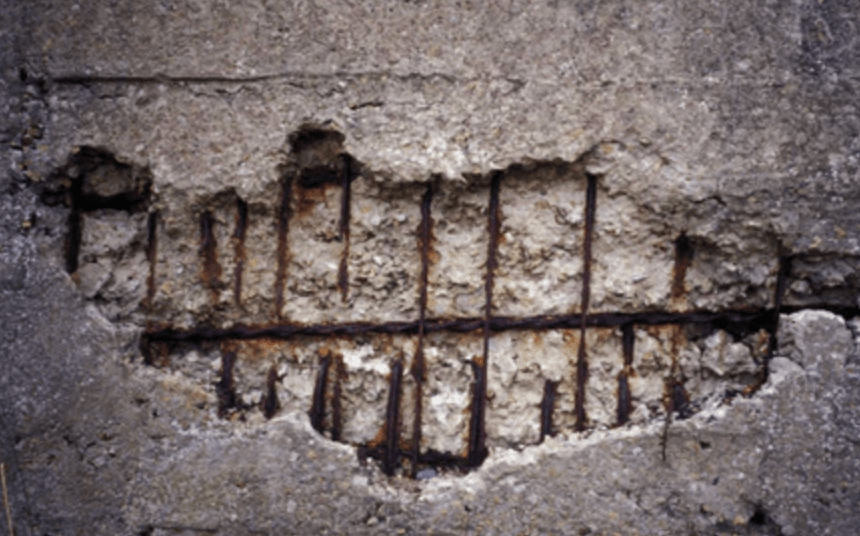
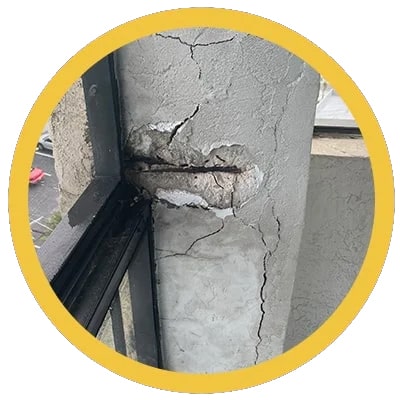
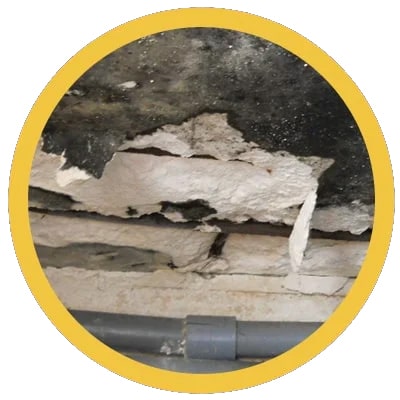
If you want a simple definition, spalling is when pieces of concrete start flaking, cracking, or breaking away, usually because water (Chlorides) has gotten to the steel reinforcement inside and caused it to rust. The steel expands as it rusts, pushing the surrounding concrete outward like popcorn in a microwave.
Now here’s the kicker: spalling doesn’t grow slowly. It grows at a geometric rate. That means the problem doesn’t just double—it can multiply exponentially, like a credit card balance that you never pay off. One little crack today becomes a whole panel tomorrow, and then suddenly your parking garage looks like it’s auditioning for a demolition scene in a movie.
When left unattended, spalling:
Weakens structural integrity.
Increases repair costs dramatically.
Spreads into adjacent areas.
Jeopardizes life safety.
(And no, putting duct tape on it will not help, despite what your uncle with a toolbox and a six-pack might tell you.)
Why You Can’t Just Ignore Concrete Repairs
Here’s the part nobody likes to hear: if an engineer finds a structural problem, you can’t wish it away. Florida law is very clear about this.
In Miami-Dade and Broward Counties, once your building hits 40 years (and every 10 years thereafter), it must go through a structural and electrical recertification. These inspections have been renamed and updated after the Champlain Towers tragedy, but the concept is the same: if repairs are required, they must be done.
If you fail the inspection, your building won’t pass. Kick the can too far down the road, and the Building Department can—and has—issued orders to vacate or demolish buildings.
Structural Integrity Reserve Studies (SIRS)
Florida’s new laws also require condo associations to conduct a Structural Integrity Reserve Study. This study forecasts how much money the association needs to save for future repairs. If the report says you’ll need $5 million in repairs in six years, guess what? You legally have to set aside those funds and then spend them on those repairs when the time comes.
So when residents or Board members ask, “Do we really need to do this?” the answer is: if it’s in the SIRS, you do. The law doesn’t allow you to reallocate those funds to a new pool deck or lobby chandelier.
Engineers’ Duty to Report
Another key point: engineers in Florida have a legal responsibility to report dangerous conditions directly to the Building Official. Even if a Board would prefer to “keep things quiet,” if I see something that affects the safety of residents, I am required to report it. If I don’t, I could lose my license.
That’s why I often tell residents and Boards:
If an engineer says it needs repair, that’s almost always the final word.
Second opinions rarely change things.
Save your money for the repair itself instead of paying multiple engineers to tell you the same bad news.
(Source: Florida Statutes Chapter 553, Building Construction Standards)
Sign or Symptom
What It Might Mean
Why It Matters
Typical Action Required
Cracks in concrete surfaces
Possible spalling or structural stress
Cracks allow water to penetrate and reach reinforcing steel, accelerating corrosion
Inspection by engineer; repair may involve sealing or structural patching
Rust stains on walls or ceilings
Corroding rebar inside concrete
Indicates rebar expansion is pushing against concrete, leading to spalling
Engineer evaluation; chipped-out concrete and rebar treatment/replacement
Chipping or flaking concrete
Concrete spalling in progress
Loss of concrete cover weakens structural integrity
Concrete repair with proper patch materials
Exposed rebar
Severe deterioration
Rebar corrodes quickly when exposed, reducing structural strength
Immediate repair required; rebar cleaning, coating, and patching
Water leaks through slabs or walls
Compromised waterproofing or cracks
Water intrusion accelerates damage and may impact habitability
Leak detection, waterproofing, and repair
Uneven or sagging slabs
Potential foundation or structural failure
May indicate widespread deterioration or load issues
Full structural evaluation and possible major repair
Visible mold or damp spots
Moisture intrusion
Moisture worsens concrete deterioration and affects air quality
Identify source of water and repair affected concrete areas
The Psychology of Concrete Repairs
Let’s be honest: nobody likes being told they need to spend potentially millions of dollars on repairs they can’t see or touch. It’s like being told you need surgery on an organ you didn’t know you had.
Here are some of the reactions I encounter when I deliver a concrete repair diagnosis:
Denial: “It’s just a crack; can’t we just patch it with paint?”
Suspicion: “Are you sure you’re not just trying to get a big contract out of us?”
Deflection: “Let’s wait until the next Board is elected to deal with this.”
Acceptance: Rare, but it does happen.
The truth is, concrete repair is like going to the dentist. Ignore the cavity today, and you’ll be paying for a root canal tomorrow.
True Story to Learn From
Back in 2017, I was called out to inspect a beachfront high-rise in South Florida. I walked through their garage and immediately saw signs of spalling and rusted reinforcement. I told the Board that repairs were needed and urged them to address the problem as soon as possible.
The residents didn’t like what they heard. I got the usual mix of skepticism, eye rolls, and the silent treatment in the elevator ride down. Nobody wants to be the bearer of bad news, but that’s part of my job.
Fast forward four years. That very same building collapsed. It was Champlain Towers in Surfside. Ninety-eight lives were lost. Families shattered. And Florida changed forever.
Now, to be clear, I’m not saying my inspection alone could have prevented the collapse. The story is much longer and more complex, with many contributing factors. But the lesson is this: when engineers raise red flags about structural problems, ignoring them can lead to catastrophic consequences.
That’s why Florida’s laws have tightened since Surfside. No more “kicking the can down the road.” No more patch jobs to get through another year. Safety has to come first, even if it’s expensive.
(Source: National Institute of Standards and Technology report on Champlain Towers, 2023)
How to Know If You Really Need Concrete Repair
So let’s come back to the original question: “How do I know if my building really needs concrete repair?”
Here’s the checklist:
An engineer has identified spalling or structural cracks. → That’s the biggest red flag. If it’s in a written report, it’s not optional.
Your 40-year or milestone inspection requires it. → You cannot pass inspection without completing the repairs.
Your Structural Integrity Reserve Study has forecasted it. → You’re legally required to fund and perform those repairs.
There are visible signs of distress. → Cracks, rust stains, water intrusion, or falling pieces of concrete are all signals.
An engineer has reported conditions to the Building Official. → At that point, the city or county is officially aware. Noncompliance can result in vacate or demolition orders.
Short answer: if an engineer says it needs repair, you pretty much have to get it done.
Different Perspectives
The Skeptics
Some Board members or residents think engineers are too conservative and “call repairs” that aren’t necessary. They argue that engineers are just trying to drum up business for contractors.
Here’s the problem with that logic: engineers don’t have much to gain based on how much repair work is performed. Our role is to observe, diagnose, and report conditions. If we ignore issues, we risk losing our license—or worse, being held liable if the structure fails.
Florida law (and building codes like the Florida Building Code and ACI 562-19) are designed with safety margins built in. That means by the time an engineer calls out a repair, the condition is already beyond the point of “wait and see.”
(Source: American Concrete Institute ACI 562-19, Code Requirements for Assessment, Repair, and Rehabilitation of Existing Concrete Structures)
Bibliography
Source: American Concrete Institute (ACI 562-19). Code Requirements for Assessment, Repair, and Rehabilitation of Existing Concrete Structures.
Source: Florida Statutes Chapter 553. Building Construction Standards.
Source: National Institute of Standards and Technology (NIST). Investigation into the Partial Collapse of Champlain Towers South.
For additional information you can access the following:
Miami-Dade County Building Department — miamidade.gov
Florida Board of Professional Engineers — fbpe.org
Everyone wants a quick fix for broken concrete, but there’s no magic dust that can reverse years of rust, spalling, and neglect. In this blog, I’ll explain what spalling is, why chemical shortcuts don’t work as long-term solutions, the truth behind “miracle” products, and what real engineering repair methods like cathodic protection and ICRI-standard patching actually involve. I’ll also share a true story from Hollywood, Florida, where a board almost made a very expensive mistake.
The Myth of the Magic Dust
I get this question more than you’d think: “Can’t we just sprinkle something on the concrete to stop the rust?”
It sounds like a great idea. Just toss some miracle powder into the cracks, maybe wave a wand, and—poof!—the steel inside stops corroding, the spalling disappears, and everyone saves millions. Unfortunately, buildings don’t work like fairy tales.
The standard, time-tested way to fix spalled concrete is:
Chip out the damaged concrete.
Expose and clean the corroded reinforcing steel.
Apply protective treatment to the steel.
Patch with high-strength repair mortar or concrete.
This is not just tradition—it’s science. The steel inside concrete (rebar) rusts when chlorides and moisture get in. Rust expands up to 7x the volume of the original steel (Source: American Concrete Institute ACI 562-19). That expansion causes cracking and more spalling. It’s like dental cavities—if you don’t drill out the rot, it keeps spreading.
Still, over the years, manufacturers and sales reps have pitched “shortcut” solutions. Let’s look at a few of them.
Chemical Approaches People Ask About
1. Hydrophobic Treatments
How they work: These are surface-applied chemicals that repel water (think Rain-X for your building). The idea is to keep moisture from soaking into the concrete.
Benefits:
Easy to apply—usually a spray or roller.
Can reduce water absorption.
Useful for protecting sound concrete before corrosion starts.
Limitations:
They don’t stop chloride ions (from salt air or seawater) from migrating through cracks.
They don’t repair already damaged areas.
Like sunscreen, they wear off and need reapplication every few years.
When to use: Great as a preventative measure, especially in South Florida coastal areas, but not a fix once spalling has begun.
2. Corrosion-Inhibiting Impregnations
How they work: These are chemicals that supposedly “neutralize” corrosion by passivating the rebar. They’re applied on the surface and soak into the pores.
Benefits:
Sometimes delay corrosion progression.
Can be cost-effective in small-scale maintenance projects.
Limitations:
Performance varies widely depending on product.
Rarely backed up with long-term independent studies.
Ineffective when steel is already heavily corroded.
When to use: Only as part of a comprehensive program, not as a standalone “cure.”
3. Epoxy Injections
How they work: Epoxy is injected into cracks under pressure. It bonds cracked concrete back together and fills the voids with a strong glue-like material.
Benefits:
Excellent for structural cracks where integrity is at risk.
Bonds concrete tightly, restoring load capacity.
Limitations:
If steel corrosion is ongoing, epoxy just seals in the problem. The steel will keep rusting, now hidden inside.
Useless for widespread spalling.
When to use: Ideal for structural cracks without corrosion, like those caused by overload or shrinkage. Not for rust-induced spalling.
Why These Aren’t Long-Term Fixes
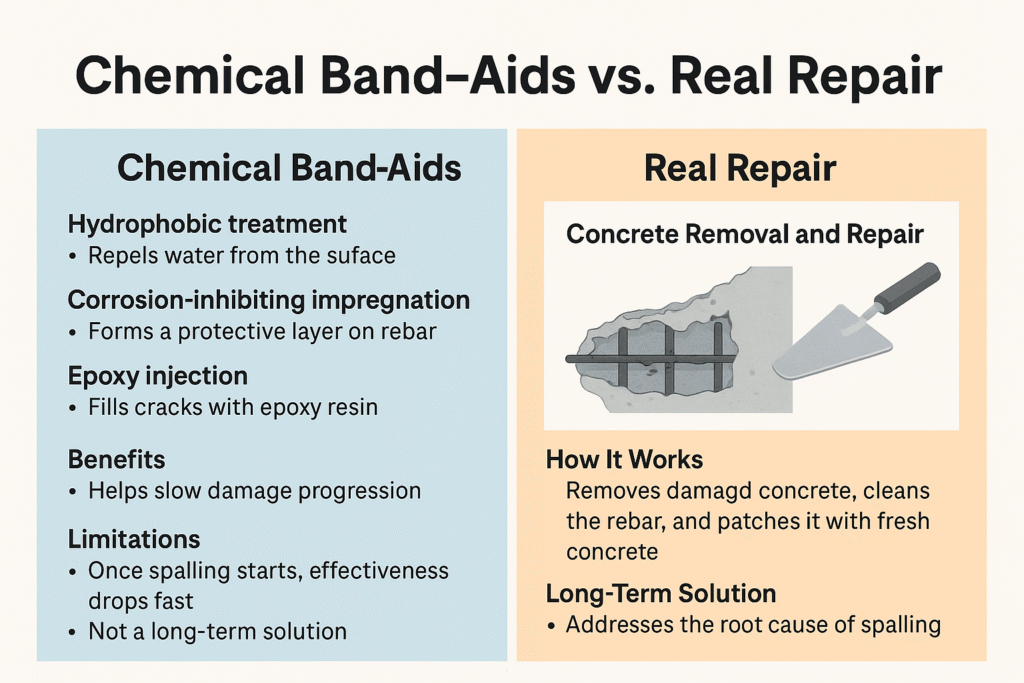
Once the concrete breaks and rebar corrodes, surface chemicals or injections are just “band-aids.” They can’t reverse the expansion of rust or restore lost cross-section in steel.
In fact, sometimes they make the problem worse. By sealing cracks without addressing the root cause, the rust continues in secret—until it bursts out in a bigger, more expensive failure.
As engineers, our guidance comes from standards like the International Concrete Repair Institute (ICRI) guidelines and ACI 562, which lay out when to chip, clean, and patch. It’s not glamorous, but it works.
The Reality of Real Repairs
Proper concrete repair involves:
Demolition crews carefully chipping away spalled areas (no sledgehammering randomly).
Cleaning rebar to near-white metal condition.
Special inspections (yes, another layer of oversight) to make sure every step is done right.
Bonding agents and repair mortars that match or exceed the surrounding concrete strength.
Every step comes with liability—engineers, inspectors, and contractors all sign their names on this. Why? Because if something goes wrong, the safety of hundreds of people may be at risk.
Cathodic Protection: The “Middle Way”
There is one alternative that doesn’t involve chipping every inch of concrete: cathodic protection.
How it works (in plain English): Rust happens when steel loses electrons. Cathodic protection gives those electrons back using a “sacrificial anode”—usually a piece of zinc. The zinc corrodes instead of the steel, like taking a bullet for the team.
Analogy: Think of it like hooking jumper cables from your corroding rebar to a piece of cheap metal that’s willing to sacrifice itself.
Pros:
Extends life of concrete without massive demolition.
Proven technology in marine and bridge structures.
Can be targeted to high-risk zones.
Cons:
Expensive up front.
Needs ongoing monitoring and maintenance.
Doesn’t reverse existing damage—just slows or halts future corrosion.
Where I’ve used it: I’ve specified sacrificial zinc anodes on several Florida coastal garages and high-rise balconies. It works—but only when combined with proper repair of existing spalls.
True Story to Learn From
Many years ago in Hollywood, the Quadomain Towers almost made a costly mistake.
An outfit came to the condo board with a pitch: “We have a special liquid that, when applied to the concrete, seeps inside and cures the rusted steel.” It sounded wonderful—cheap, quick, no demolition mess. The board was excited.
I got involved. I asked the manufacturer for technical data, independent testing, or even one peer-reviewed paper showing long-term results. I called the company owner directly. What I got back was a glossy brochure and vague claims. The testing data didn’t back up their promises.
I told the board plainly: “If you go forward, you’ll just end up doing the real repairs later—and for much more money.”
Thankfully, they listened. The “miracle cure” would have been a very expensive band-aid.
Do I wish there was a magic dust that fixed spalling instantly? Absolutely. I’d probably be out of business, but people would be safer, and condos wouldn’t have to spend millions. Until then, the only real cure is proven engineering repair.
Different Perspectives
Over the years, I’ve come across plenty of people—sometimes board members, sometimes contractors, and even a few well-meaning residents—who truly believe that concrete can be “cured” with a liquid, a spray, or some sort of miracle coating. To them, the idea of taking a jackhammer to perfectly good-looking concrete seems like overkill. Why spend thousands—or even millions—when a gallon of chemical solution promises to seep into the concrete and “heal” the rebar from within?
I understand where that thinking comes from. On the surface, it feels intuitive. We live in a world where technology advances every day, and new products claim to solve problems faster, cheaper, and with less hassle. If there’s a medicine that cures disease, why shouldn’t there be a chemical that cures concrete cancer?
But here’s the problem: concrete doesn’t work like human tissue. Once steel reinforcement inside concrete begins to corrode, it expands, creating pressure that cracks and weakens the surrounding concrete. At that point, no magic liquid is going to reverse the rust or glue the broken bond back together. Some treatments, like hydrophobic sealers or corrosion inhibitors, do serve a purpose—but only as a preventive measure on concrete that’s still intact. Once the damage is visible, those products are essentially trying to bandage a broken bone with a piece of tape.
I’ve seen situations where people pushed hard for these “quick fixes” because they were cheaper, easier, or less disruptive than real repair work. But in every case, the damage kept spreading. And eventually, the repair bill was larger, the liability was higher, and the frustration was worse. It’s not that these alternative perspectives are born out of ignorance; they’re born out of hope. Hope that there’s an easier way. Unfortunately, engineering doesn’t bend to wishful thinking—it bends to physics, chemistry, and time.
Repair Method,How It Works,Pros,Cons
Hydrophobic Treatments,Repels water by making the concrete surface less absorbent,Reduces moisture penetration
Easy to apply
Can prolong service life if used early,Does not stop existing corrosion
Limited effect once spalling has started
Requires reapplication over time
Corrosion-Inhibiting Impregnations,Chemicals penetrate into concrete to slow steel corrosion,Can slow down rusting
Useful for preventive maintenance
Non-invasive application,Not effective if corrosion is advanced
Limited penetration in dense concrete
Expensive for limited benefit
Epoxy Injections,Injecting epoxy into cracks to seal and restore strength,Restores structural continuity
Seals cracks against water
Quick application,Does not address rusted steel
Can trap moisture and accelerate corrosion if not done properly
Best only for hairline cracks
Magic Chemical Products,Liquids or treatments claiming to ‘stop rust instantly’,Easy marketing appeal
Seems like a quick fix
Lower upfront cost,Unproven in long-term performance
Risk of failure
May cost more later if true repairs are needed
Traditional Chipping + Steel Cleaning + Patch,”Remove damaged concrete, clean/reinforce steel, patch with new concrete”,”Industry standard
Long-lasting
Backed by codes (ICRI, ACI)”,Expensive
Labor-intensive
Requires multiple inspections
Cathodic Protection (Sacrificial Zinc Anodes),Attaches zinc nodes that corrode instead of steel (sacrificial protection),Excellent for halting steel corrosion
Proven technology
Can extend life of repairs,Installation can be costly
Requires design and monitoring
Does not repair existing spalls
Bibliography
Source: American Concrete Institute. ACI 562-19 Code Requirements for Assessment, Repair, and Rehabilitation of Existing Concrete Structures. Source: International Concrete Repair Institute (ICRI). Guideline No. 03730: Guide for Surface Preparation for the Repair of Deteriorated Concrete Resulting from Reinforcing Steel Corrosion. Source: National Association of Corrosion Engineers (NACE). Cathodic Protection of Reinforced Concrete Structures. Source: Federal Highway Administration. TechBrief: Cathodic Protection for Reinforced Concrete Bridge Decks. fhwa.dot.gov Source: Concrete Society Technical Report No. 60. Electrochemical Tests for Reinforcement Corrosion in Concrete.
ICRI Technical Guidelines No. 03730
For additional information you can access the following:
American Concrete Institute — www.concrete.org
International Concrete Repair Institute — www.icri.org
Concrete repair projects in Florida have a notorious reputation for going over budget. In this blog, I’ll break down the top three reasons why it happens—hidden conditions, underestimated quantities, and change orders—plus a few honorable mentions like material price escalation and contractor performance. I’ll also share a real-life story from a South Florida condo project where the budget ballooned sixfold, and what property managers and Boards can learn from it.
Reason 1- The Hidden Conditions Nobody Wants to Talk About
If you’ve ever had a toothache, you know that what you see in the mirror (a tiny dark spot) is only the beginning. By the time the dentist pokes around, suddenly you’re scheduling a root canal and rethinking your sugar habits. Concrete repair works the same way.
When engineers like me go out to quantify spalling or deterioration, we’re often limited by what we can see. We walk the building, tap surfaces with hammers, check balconies, parking garages, and columns, and make the best estimate we can. But concrete is sneaky. A small crack on the outside may hide a spider web of corrosion inside. Once contractors start chipping away, we often discover that the damage goes much deeper and wider than what was visible during inspection (Source: American Concrete Institute ACI 562-19).
This isn’t because engineers are bad at their jobs—it’s because we don’t carry x-ray vision goggles. Even advanced tools like ground-penetrating radar or half-cell corrosion testing give us only probabilities, not certainties. The truth is, hidden conditions are the single biggest budget-buster in concrete restoration.
What can boards and homeowners do? One practical step is to budget a contingency fund—typically 15–25% of the projected repair costs—for hidden conditions. Think of it as the rainy-day fund for your building. If the hidden problems don’t show up, you can always reallocate the money. But if they do—and they usually do—you’re not blindsided.
Reason 2- Underestimated Quantities
This reason is often confused with hidden conditions, but they’re not quite the same. Hidden conditions are surprises we literally couldn’t see until demolition began. Underestimated quantities, on the other hand, are sometimes the result of optimistic projections, rushed inspections, or even just the natural difficulty of predicting how many cubic feet of concrete will ultimately need replacing.
For example, during a safety inspection, I may estimate that 10% of the garage deck is compromised. Once the contractor mobilizes and starts chipping, it turns out to be 25%. The quantity itself wasn’t “hidden”—it was underestimated.
What can be done about it? Boards and managers can reduce the risk of underestimated quantities by insisting on thorough inspections before bidding. That might include destructive testing—yes, actually breaking into a few sample spots to see what’s really going on beneath the surface. It costs money upfront, but it’s cheaper than writing six-figure change orders later. Getting multiple bids and comparing not just the price but the scope of assumed repairs also helps spot underestimates.
Reason 3- Change Orders
Ah, the dreaded change order. If hidden conditions are the toothache and underestimated quantities are the cavity, change orders are the dental crown you didn’t budget for but suddenly need.
In concrete repair, change orders can arise from two main sources:
Necessary changes because the damage is worse than expected.
Elected changes because the board or owners decide to upgrade.
I’ve seen both. Sometimes, a change order is unavoidable, like when new cracks appear mid-project. Other times, a newly elected board wants to replace all the windows, sliding glass doors, or railings while the contractor is already on-site. These “scope creep” decisions can turn a $2.5 million project into a $15 million project (more on that in the story below).
How to minimize change orders? The key is clear planning and scope definition from the beginning. If you think new windows might be in your building’s future, bake them into the original project. Make sure your contracts have a clear change order process with oversight from your engineer. And keep open communication between the engineer, contractor, and Board so surprises don’t derail the budget.
Honorable Mentions
While hidden conditions, underestimated quantities, and change orders are the big three, two other issues deserve recognition:
Material Price Escalation. Concrete, reinforcing steel, epoxy, and coatings are global commodities. Prices rise with inflation, tariffs, or supply chain disruptions. Anyone who lived through 2020–2022 saw material costs shoot up mid-project. That’s why locking in pricing with your contractor when possible is so important (Source: Associated General Contractors of America).
Contractor Performance Issues. Concrete repair is a specialized trade. Unfortunately, not every contractor is equally skilled, and Florida has a shortage of experienced restoration crews. If work has to be redone, or if corners are cut, costs rise fast. Choosing contractors with a proven track record in structural repair is critical. And remember, repairing bad concrete repairs costs significantly more than doing it right the first time.
True Story to Learn From
A few years back, I worked as the engineer and owner’s representative on a large seaside condo in Dade County. The initial budget was about $2.5 million. Reasonable enough, right? Well, by the time the project wrapped up, the final tab was closer to $15 million.
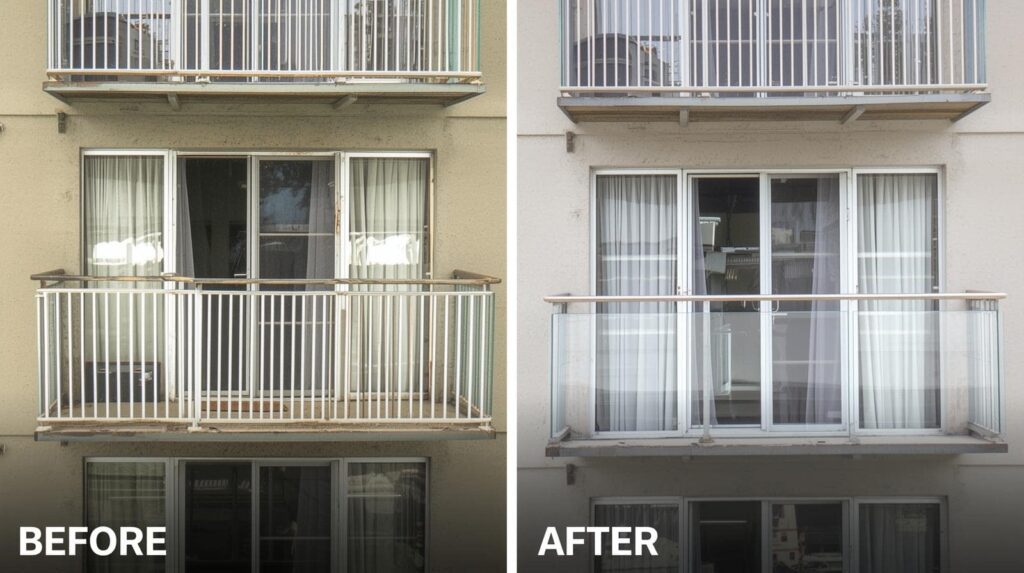
Surprised? I figure you’d be. But here’s what happened: a new incoming board decided they wanted brand new sliding glass doors, windows, and glass railings on the entire property. That decision alone added millions. On top of that, the concrete repair quantities were underestimated and the change orders piled up.
Here’s the silver lining: by the time the project finished, the building looked stunning. Its market value shot up, and residents were proud of their investment. The downside? HOA fees rose significantly, and some residents couldn’t afford to stay. It was a happy ending for the building, but not for everyone inside it.
Different Perspectives
Some in the industry argue that hidden conditions and underestimated quantities shouldn’t be excuses—that engineers should be able to predict everything upfront. But the reality is more complex. Even with destructive testing, corrosion can spread unpredictably, especially in coastal Florida where saltwater intrusion accelerates deterioration. Other critics claim that change orders are often “padding” by contractors. While there’s no denying that unethical practices exist, in most cases, change orders reflect legitimate shifts in scope or conditions. This is why having a trusted engineer oversee the process is so vital.
Bibliography
Source: American Concrete Institute (ACI 562-19). Code Requirements for Assessment, Repair, and Rehabilitation of Existing Concrete Structures. Source: Associated General Contractors of America. Construction Inflation Alert. www.agc.org Source: Florida Statutes, Chapter 718 & 720. Condominium and HOA laws regarding structural integrity reserves. www.leg.state.fl.us Source: Florida Building Code, 2023 Edition. Source: International Concrete Repair Institute (ICRI). Guidelines for Concrete Repair.
For additional information you can access the following:
Concrete repair isn’t just a maintenance task in Florida—it’s part of a billion-dollar industry that keeps engineers, contractors, and lawyers very busy. From salt and humidity eating away at steel to aging buildings now facing stricter post-Surfside laws, Florida sits at the center of concrete repairs. In this article, I’ll explain why our coastal environment makes us ground zero for spalling, what the new rules mean, and why fixing concrete is never just a matter of sprinkling some magic dust.
Why Florida is at the Center of this Billion-Dollar Industry
When people outside the Sunshine State think of Florida, they picture retirees, iguanas sunning themselves on rooftops, and hurricanes that make the Weather Channel anchors stand sideways in the wind. What they usually don’t think of is concrete repair. Yet here, concrete repair is as much a part of life as sunscreen and toll roads.
So why is this so prevalent in Florida? The answer comes down to three major villains and one very important new referee:
Salt and ocean air (chloride ions that love eating steel for breakfast).
Humidity and rain (moisture is like the gasoline on the fire).
Aging building stock (some of it more than 100 years old in places like South Beach).
Post-Surfside laws and regulations (the referee blowing the whistle harder than ever before).
Put these together and you have the perfect recipe for concrete spalling, multimillion-dollar repairs, and, in many cases, lawsuits when boards, residents, contractors, or owners try to cut corners.
(Source: Federal Highway Administration report on corrosion in reinforced concrete structures, 2013; FEMA coastal construction guidelines).
Salt, Humidity, and the Ocean: Florida’s Three Musketeers of Corrosion
Let’s start with our environment. Salt air is basically the “hiding stalker” of concrete deterioration—it sneaks in through microscopic pores, finds the reinforcing steel (rebar), and starts a corrosion party. When steel rusts, it expands, pushing out against the concrete cover. That’s when you see cracks, bulges, and chunks falling off your balcony.
Now, add Florida’s humidity into the mix. We don’t just get humid; we practically breathe soup for six months of the year. Moisture keeps the steel perpetually wet, which is exactly what corrosion needs to thrive. Pair that with common rainstorms and the occasional hurricane, and you’ve got conditions that would make even the best concrete tremble.
Finally, there’s the ocean. For seaside condos in Miami Beach, Hollywood, or Fort Lauderdale, salt spray acts like free delivery service for chloride ions. Even buildings that are set back from the beach still deal with wind-blown salt. The American Concrete Institute notes that coastal environments are some of the harshest for reinforced concrete, requiring special durability design (Source: American Concrete Institute, ACI 562-19).
It’s no wonder so many of my inspections feel like I’m walking into a CSI episode for concrete.
Aging Buildings: Florida’s Time Bombs
Miami-Dade and Broward counties are full of buildings that were thrown up during the condo boom of the 1960s and 1970s. Many of these are now 50+ years old, and some historic buildings in South Beach are over 100 years old and still in active use. According to the Miami-Dade County Property Appraiser’s data, nearly half of Miami Beach’s condo inventory was built before 1980 (Source: Miami-Dade County Property Appraiser).
That means tens of thousands of units are now at or past the age when significant structural repairs are unavoidable. If you own one of these buildings, congratulations—you basically own a classic car. It may look great from a distance, but under the hood the rust is spreading fast, and the mechanic (in this case, your engineer) is about to hand you a very large bill.
The truth is that aging reinforced concrete doesn’t just need cosmetic touch-ups. By the time spalling shows up on the surface, it usually means there’s a deeper structural issue brewing.
The New Laws After Surfside
On June 24, 2021, the Champlain Towers South collapsed in Surfside, killing 98 people. This tragedy shook the entire country and permanently changed the way Florida regulates building safety. The new laws passed in 2022 and updated in 2023 mandate stricter timelines and reserve funding requirements:
Milestone inspections are now required statewide for condos and co-ops three stories or higher.
Buildings must complete their first inspection at 30 years old, or 25 years old if located within three miles of the coast. After that, inspections repeat every 10 years.
Structural Integrity Reserve Studies (SIRS) are required so boards can no longer waive reserves for major structural elements. That means setting aside millions for future concrete repairs whether you like it or not.
(Source: Florida Statutes 553.899 and 718.112; Florida Building Commission updates).
These new regulations are like the state saying, “No more kicking the can down the road.” For boards, that means bracing residents for mandatory assessments. For engineers like me, it means a steady stream of inspection calls. For concrete contractors, it means business is booming—sometimes literally.
Table: Why Florida Is at the Epicenter of Concrete Repair
Here’s a breakdown of the major culprits that make Florida ground zero for concrete repair:
Culprit
How It Damages Concrete
Impact on Florida Buildings
Salt Air (Chlorides)
Penetrates pores, corrodes reinforcing steel
Accelerates spalling, especially near the coast
Humidity & Rain
Keeps concrete perpetually moist
Promotes rust, mold, and weakens structural integrity
Ocean Proximity
Constant exposure to salt spray and storms
Higher repair frequency for seaside condos
Aging Building Stock
Many condos 40+ years old (some 100+)
Major repairs required for recertification
New Post-Surfside Laws
Mandated inspections & reserve studies
Multi-million dollar repair obligations
True Story to Learn From
Years ago, I was the engineer and contractor on a building in South Beach right on the ocean. Up to that point, it was the worst case of concrete deterioration I had ever seen. Balconies were crumbling, the garage looked like it had been used for target practice, and the rebar was so rusted I thought about bringing a tetanus shot just to walk the site.
I sat down with the Board and told them bluntly: “You’ve got two choices. Repair this building at great cost, or tear it down and start over.” Their jaws dropped. But here’s the kicker: tearing it down wasn’t really an option. The building was historic, and zoning laws had changed so much that a new structure wouldn’t have come close to matching the old one.
So, they bit the bullet and chose repairs. The project took nearly two years and cost almost as much as building a new tower. But when it was done, the building looked brand new, the units skyrocketed in value, and the owners had the peace of mind of knowing their building wasn’t about to join the Surfside cautionary tale.
The moral? Concrete repair isn’t optional in Florida. It’s survival.
Different Perspectives
I’ve actually heard people argue that concrete repairs are exaggerated by engineers and contractors looking for work. I’ve heard residents mutter under their breath during board meetings, “This is just a scam to line their pockets.” Others point to chemical products advertised as “miracle cures” that supposedly stop corrosion without the need for messy repairs.
Here’s the problem: the science doesn’t back those claims. The American Concrete Institute and the International Concrete Repair Institute are clear that once steel reinforcement is actively corroding, the only durable fix involves removing deteriorated concrete, cleaning the steel, and patching with repair mortar (Source: International Concrete Repair Institute Guidelines). Anything else is like putting a Band-Aid on a broken bone. I would also say that Cathodic protection is also a very viable alternative (more on that in another article).
As for the suspicion about engineers? Trust me, I don’t get any joy from telling a group of retirees their maintenance fees are about to triple. It makes me about as popular as a mosquito at a barbecue. But ignoring the problem doesn’t make it cheaper—it only makes it worse.
Bibliography
Source: American Concrete Institute (ACI 562-19) – Code Requirements for Assessment, Repair, and Rehabilitation of Existing Concrete Structures Source: International Concrete Repair Institute (ICRI) – Concrete Repair Guidelines Source: Federal Highway Administration (FHWA) – Corrosion Costs and Preventive Strategies in the United States (FHWA-RD-01-156) Source: FEMA – Coastal Construction Manual (FEMA P-55) Source: Florida Statutes 553.899 and 718.112 – Milestone Inspections and Structural Integrity Reserve Studies Source: Miami-Dade County Property Appraiser – Historical Building Stock Data
If your wondering what is a concrete restoration specialist and what exactly do they do your in luck. In this comprehesive guide we will delve deep into the difference between a concrete contractor and a concrete specialist. We will factor in why a concrete repair specialist has more experience and skills working on concrete structures. This includes concrete repairs and concrete restorations.
difference between a concrete restoration specialist and contractor
While both concrete contractors and concrete repair specialists handle similar tasks, a restoration specialist brings a wealth of experience and expertise specifically tailored to concrete restorations. Unlike general contractors, restoration specialists are highly skilled in revitalizing aging or deteriorating concrete structures, particularly crucial in regions like South Florida where salt ions in the air and weather conditions can be harsh.
Concrete contractors typically focus on constructing new concrete structures and addressing basic repair needs. However, when it comes to intricate restoration projects, a specialist is indispensable. They possess a deep understanding of the unique challenges posed by aged concrete and can accurately assess the extent of damage, offering innovative solutions to restore functionality and aesthetics.
By hiring a concrete restoration specialist, clients benefit from their nuanced approach to addressing structural issues, along with their ability to devise creative strategies for repair and preservation. Their expertise ensures that historical or weather-worn buildings regain their former glory while meeting modern standards of durability and safety.
What are the benefits of hiring a COncrete restoration specialist
Concrete restoration specialists possess comprehensive expertise in various concrete materials and construction techniques. Whether tasked with repairing a cherished historic landmark or a sprawling oceanfront structure, these specialists conduct meticulous analyses of the damage and develop detailed engineering plans to execute the necessary repairs.
Their extensive experience in revitalizing aging buildings equips them with invaluable insights into effective restoration strategies. Having encountered numerous real-world scenarios, they have firsthand knowledge of what methods yield the best results and can navigate the complexities inherent in repairing older structures.
It’s essential to recognize that constructing a new concrete structure differs significantly from repairing an existing one. The intricacies involved in restoring an aged building demand a specialized skill set and an understanding of historical preservation principles. Concrete restoration specialists are adept at navigating these challenges, ensuring that repairs are carried out with precision and care to uphold the integrity and longevity of the structure.
What does a concrete restoration specialist do?
The initial step undertaken by a concrete restoration specialist is a comprehensive analysis of the building, focusing on identifying any underlying structural problems. These issues often manifest as concrete spalling, wall cracks, and other visible signs of deterioration.
Following this assessment, the specialist proceeds to examine the type of concrete originally used in the construction and assesses the availability of compatible materials. Given that older buildings were constructed using different methods and materials than contemporary structures, it is crucial to engage a specialist with extensive experience in working with historic construction techniques.
Once the thorough analysis is complete, the restoration specialist devises a detailed plan for the necessary repairs, known as engineering plans. These plans meticulously outline the materials to be utilized, precise dimensions, and a systematic approach for executing the repairs. It’s imperative to enlist the expertise of a seasoned structural engineer who possesses specific knowledge of historic building restoration.
With the engineering plans finalized, the restoration contractors initiate the repair process, executing the outlined tasks with precision and expertise. By adhering to the meticulously crafted plans, they ensure that the restoration work is carried out effectively, preserving the structural integrity and historical significance of the building.
As concrete restoration contractors our team has over 100 years of combined experience repairing concrete structures, columns, slabs, concrete roofs, balconies, and staircases.
How to find a concrete restoration specialist?
Fantastic news! We’re proud to announce that we provide three different specialists that make us qualified for the job: concrete restoration specialization, contracting expertise, and structural engineering proficiency. This unique combination empowers us with unparalleled insight and capability in repairing older buildings throughout South Florida, offering comprehensive solutions tailored to every aspect of concrete restoration.
As concrete restoration specialists, we bring a wealth of experience and skill in revitalizing aging structures, ensuring they regain their former glory while meeting modern standards of durability and safety. Our contracting expertise enables us to seamlessly execute restoration projects, managing every detail with precision and efficiency.
Moreover, our proficiency as structural engineers equips us with the technical knowledge and foresight to address complex structural issues inherent in older buildings. By seamlessly integrating these three pillars of expertise, we deliver holistic solutions that exceed expectations, providing our clients with peace of mind and confidence in the restoration process.
Guaranteed results
In conclusion, understanding the role of a concrete restoration specialist is crucial for ensuring the preservation and revitalization of aging concrete structures. Through this comprehensive guide, we’ve highlighted the key differences between general contractors and specialized restoration professionals, emphasizing the unique expertise and skills that restoration specialists bring to the table.
From conducting thorough structural analyses to devising meticulous engineering plans and executing repairs with precision, these specialists play a vital role in safeguarding the integrity and longevity of historical and weather-worn buildings.
With our team’s extensive experience in concrete restoration, contracting, and structural engineering, we offer unparalleled insight and capability in addressing the diverse challenges of restoring older buildings throughout South Florida. By seamlessly integrating our specialized expertise, we deliver holistic solutions that exceed expectations, ensuring that our clients can trust in the quality and longevity of the restoration process.
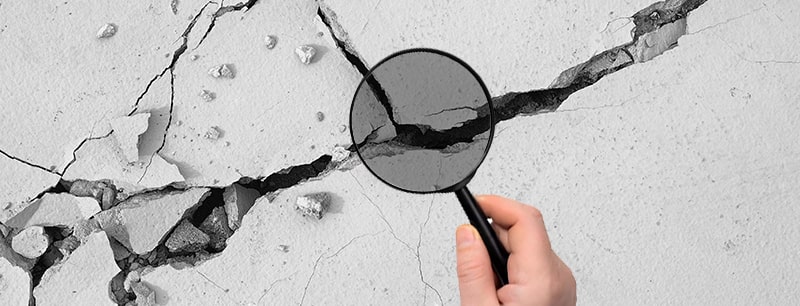
One does not have to be a structural engineer to know that a crack anywhere on a building is not a good sign. Aside from being ugly, cracks can be the first sign of structural issues in a building. However, some of the cracks in your concrete walls, columns, or slabs might not necessarily compromise the structural integrity of a building. The truth of the matter is that cracks come in all shapes and sizes and depending on many factors, can hint at a serious issue or are merely superficial and can be repaired rather easily.
Having performed thousands of inspections as a structural engineer, I can categorically state that the majority of the cracks I have seen are not serious to the point where a structural emergency repair is necessary. That is not to say that you can relax and ignore any crack. Although they may not need emergency repairs chances are if left untreated the crack can open up over time and start to cause the underlying reinforcement which is typically made of steel to rust and lose its strength. If you decide to ignore a crack in your house, you are risking that the crack is indeed serious and it could eventually lead to a safety risk.
I will try to keep this article in layman’s terms and do my best to explain some of the more common types of cracking that South Florida building owners are exposed to. The most common type of cracking is what I would call a “surface crack” because it is of little structural consequence and it is basically what the name denotes. The origins of these cracks are varied but many times have to do with how the stucco is applied to the surface or how the plasterer mixed the stucco (maybe with too much water in the mix or not enough rocks).
If you look at most properties closely, you will see these types of cracks somewhere. These cracks are not serious in the sense that the structure will collapse. These cracks, however, are serious in the sense that they could allow water and moisture into the property and damage the interior or allow humidity and salt molecules that are suspended in the air to penetrate and cause degradation of the reinforcing steel underneath. These cracks can be repaired by removing any loose concrete and filling it with a construction-grade epoxy.
If these superficial cracks in a building’s concrete elements are addressed early you will save thousands of dollars on future repairs. As a concrete repair contractor we have helped buildings across South Florida identify these potentially problematic cracks in concrete and analyze them to come up with several repair options.
STRUCTURAL CONCRETE CRACKS
Concrete structures are designed by engineers to withstand outside forces. When a building is subjected to forces that the property was not designed to withstand, then cracks will inevitably appear. These outside forces include, but are not necessarily limited to, hurricanes, humidity, loads imposed by the occupants, salt molecules suspended in the air, and settlement of the soils underneath, just to name a few.
Here in Florida, it is common to see cracks in the corners of a house that are diagonal. An experienced engineer will be able to identify the type of crack and, depending on the severity, provide a solution to deal with the problem. Other cracks can appear near a staircase, on a balcony, or next to a window. These types of cracks are easy to point out but are more difficult to diagnose and provide solutions for. However, an experienced concrete contractor will be able to diagnose the crack and come up with a quick solution.
Structural cracks are a serious matter since they can become worse over time and eventually render the structure unsafe. Engineers employ different investigative techniques and tools to diagnose different structural failures, but nothing compares to the experience the engineer has. With over 30 years of experience as concrete contractors, we know a thing or two about cracks. While it is not in the scope of this blog to educate the reader about all the different types of cracking, their seriousness, and their consequences, it is important to note that hiring a structural engineer to look into it is essential.
If you suspect that there is a crack on your property, I strongly suggest that you give us a call or seek out a local structural engineer or experienced concrete repair contractor to take a look at it. Depending on your area, an inspection and a report will cost you between $200 to $500. The report should contain the engineer’s observations, conclusions, and recommendations on what the next steps should be. If it is indeed a serious problem, the engineer should tell you right there and then.
What to do if you see cracks in your building
As soon as you start to see cracks in your building we recommend giving us a call. As concrete repair contractors and structural engineers, we have the experience and know-how to get your cracks patched up. The first thing we will do is provide a visual inspection of the crack and provide you with engineering plans to pull a permit and start the repairs. Once the permit is pulled and the plans are done, our team of concrete restoration specialists can take care of fixing the cracks or carrying out the repairs outlined in the engineering plans.
Concrete is widely used across the globe and is regarded as one of the most durable building materials, prized for its strength and longevity. However, over time, concrete structures can develop a common issue known as spalling, which compromises the integrity and aesthetics of a building. In this article, we will delve into the causes, effects, and solutions of concrete spalling, offering valuable insights for South Florida Building Owners, associations, and community managers.
Concrete spalling refers to the gradual deterioration of concrete surfaces, characterized by the flaking, chipping, or crumbling of the material. This phenomenon typically occurs due to a combination of environmental factors, structural deficiencies, and improper construction practices. Spalling can affect both horizontal surfaces such as driveways, staircases, and sidewalks, as well as vertical surfaces like walls and columns.
Causes of Concrete Spalling IN SOUTH FLORIDA
There are many different reasons why concrete might spall or start to deteriorate. They mostly involve corrosion of the underlying rebar that supports most concrete structures. There are also other causes such as chemical exposure, incorrect mixtures, poor application processes, water intrusion, and rusting. A concrete repair expert can give you a deeper insight into why your concrete failed but here are the most common reason for concrete spalling in South Florida.
Chemical Exposure
Exposure to harsh chemicals such as deicing salts, acids, and industrial pollutants can corrode the concrete surface, weakening its structure and causing spalling over time.
Incorrect mixtures
Improperly mixed concrete, too many additives, and insufficient reinforcement can all contribute to the formation of weak spots within the concrete, making it more susceptible to spalling. This is why many concrete repair contractors take core samples of the cured concrete in order to test it’s properties. If the concrete being used cannot withstand the pressures it is under it can cause spalling or even worse a collapse of the structure.
INPROPER APPLICATION PROCESS
Not allowing the concrete to cure before putting it under load can also cause spalling or cracks to occur. If you are repairing concrete you are also required to apply a bonding agent which works as a glue to provide better adhesion of the concrete that is covering the repaired area. Along with this many contractors will also add a rust-inhibiting coat to the structural rebar to extend its longevity and provide a lasting repair.
Water Intrusion
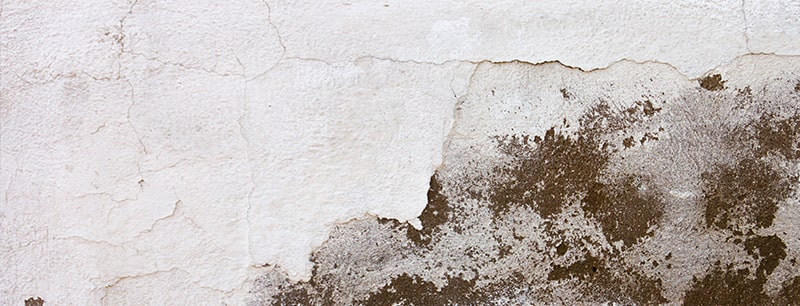
Water infiltration through cracks, joints, or porous concrete can accelerate the deterioration process by promoting corrosion of embedded steel reinforcement and weakening the bond between aggregate particles. This is especially true in South Florida where salt molecules can be evaporated into the air and penetrate the underlying rebar. Buildings in South Florida that are closer to the coast will experience concrete spalling much quicker due to this.
Effects of Concrete Spalling ON YOUR BUILDING
The effects of concrete spalling can range from minor cosmetic issues to more severe structural damage, depending on the extent and location of the deterioration. In addition to compromising the appearance of the concrete surface, spalling can compromise its structural integrity, posing safety risks to occupants and pedestrians. If left unaddressed, spalling can worsen over time, leading to costly repairs and potential liability issues for property owners.
HOW TO FIX Concrete Spalling
There are many different methods to fix concrete spalling. When you hire a professional engineer they can provide you with the best solutions for repairing the concrete spalling and getting your structure back to tip top shape. We also wrote a concrete repair guide with more info on what goes into concrete repairs.
Concrete Surface Repair
Minor instances of spalling can often be remedied through surface repair techniques such as patching, resurfacing, or overlaying with a new layer of concrete. These methods can restore the appearance and functionality of the concrete surface while addressing minor defects.
Concrete Crack Sealing
Properly sealing cracks and joints in the concrete can help prevent water infiltration and minimize the risk of spalling. Various sealant products are available, including epoxy, polyurethane, and silicone-based sealants, each offering different levels of durability and flexibility.
Structural Concrete Rehabilitation
For more extensive spalling damage, concrete rehabilitation techniques are used that can blend carbon fiber, fiber glass, or steel bits into the concrete for additional reinforcement. When there is severe spalling the contractor will usually remove areas around the damage in order to ensure there is no rust left on the rebar underneath
ENSURING A LASTING REPAIR WITH Preventive Maintenance
Implementing a regular maintenance program that includes routine inspections, cleaning, and protective coatings can help prolong the lifespan of concrete structures and minimize the risk of spalling.
Summary of Concrete Spalling
In conclusion, concrete spalling is a common issue that can affect the appearance, functionality, and safety of concrete structures. By understanding the causes, effects, and solutions of spalling, property owners, engineers, and contractors can take proactive measures to address this issue effectively and preserve the integrity of their concrete assets for years to come.
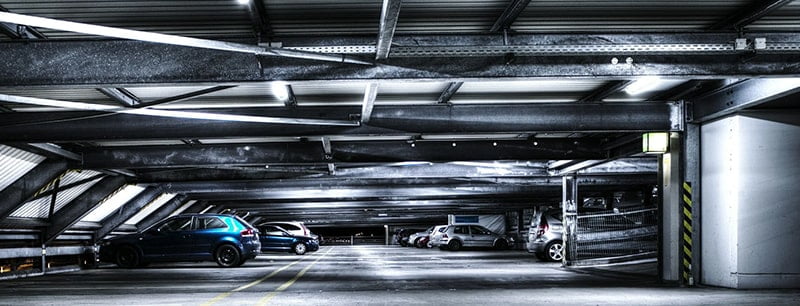
When it comes to parking garage repair or concrete parking lot repair, there are a few important points to consider. Parking garages are very distinct structures from all the other structures out in the world. These structures have large beams and columns and thick slabs that are designed to withstand the daily weight of thousands of heavy vehicles. Furthermore, the vast majority of concrete parking lot structures are open which means that they are in direct contact with the open air.
The weather and chlorides that are present in the air can lead to long-term effects on the concrete. Due to the aforementioned, owners of concrete parking structures should take special care in parking garage maintenance and in monitoring the state of their structure. Naturally, timely corrective measures significantly add to the longevity of structures.
Cracks on concrete appear due to many different reasons. These reasons range from pouring a bad batch of concrete, to corrosion and improper curing during the construction process. In other words, it’s those cracks that are caused by the constant movement, expansion, and contraction of the structure and the vehicle traffic.
If you are in a parking garage and you stand still while cars are passing by, you will likely feel yourself vibrating. Of course, this is normal and you shouldn’t be alarmed. The heat and cold cycles of day and night cause the structure to expand and contract. All these items come together to cause fissures in the concrete on a long-term basis. It is normal for the surface of a concrete parking structure to contain cracks. Small cracks typically do not constitute a serious structural problem although a review by a structural engineer is always recommended.
In any event, any type of crack should be filled at a minimum. Your structural engineer will be the person who determines which cracks are serious and which are not. Additionally, the engineer will be the professional who will not only quantify the amount of cracking but will also provide you with the best method and cost of repair.
Needless to say, engineers have the training and the experience to provide you with guidance on dealing with cracks. Furthermore, it is beyond the scope of this blog to instruct the regular layperson on the ins and outs of analyzing a structure.
Concrete spalls on your parking garage
As mentioned above, cracks can pose an immediate serious threat to the structural integrity of the parking structure. However, cracks can also cause long-term damage to the parking deck structure in the form of spalling. This spalling occurs when chlorides seep into the concrete and cause the reinforcing steel inside the concrete to rust, expand, and then rupture the concrete.
You can read more on our Concrete Spalling Guide. This is of particular note in a parking structure that is not only open to the elements but also contains cracks where these salt chlorides can easily access the reinforcing steel and make it rust.
Damage to beams
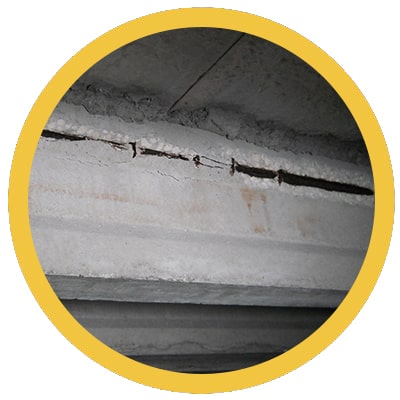
Parking structures tend to have wide-open spaces. Engineers design parking structures to have as few columns as possible to avoid any collisions with automobiles. This means that the engineers must design long beams that span from column to column. As you might have guessed, the longer the beam, the more stress it takes from the vehicles driving over it. At times, these beams show outward signs of stress by sagging and cracking.
Concrete beams are critical structural elements in a parking garage. If you see widespread cracking on a beam, do not hesitate to contact a local structural engineer to inspect it. Depending on the size, location, and direction of the crack, it could be a tell-tale sign that there is a serious structural failure lurking.
Other types of repairs
If I were to provide a comprehensive list of all the issues that can arise in a concrete parking structure, this blog would be many more pages long. Cracking and spalling are by far the most prevalent issues in a concrete parking garage. To further illustrate, several other types of repairs are typical and these are as follows:
Water intrusion
Although parking garages are open structures, we still like to walk to our car without getting wet while we are still inside the structure. If cracks are large, they will let water seep down into the walls and concrete slab and the water will eventually find its way downward by the force of gravity. Water that goes through concrete picks up chemicals that can consequently damage the nice paint job on your car.
Furthermore, parking structures also have construction joints and caulk joints that can fail. If these joints are not properly maintained, they can also fail and cause leaking of water into the interior floor of the structure. Water can cause concrete degradation over time, therefore to avoid costly parking garage repairs, it’s best to perform regular maintenance and prevent water infiltration.
Garage Repairs can escalate for a lot of reasons but water damage is especially harmful when the structure is using reinforcing steel beams commonly referred to as rebar. These steel beams are susceptible to rust and can cause concrete spalling, weakening the structural elements that keep your parking garage standing.
Rusting steel connection plates
Some parking structures are what we call “pre-cast” where many concrete pieces are brought in and welded together in the field. Each one of these concrete pieces has an “embed” which is a small steel plate where the different pieces make contact and where the welders make the connections to build the structure. These embeds can rust and sometimes fail.
Needless to say, these failures can lead to catastrophic problems and even collapses. Although collapses are rare, the owners of these structures should be vigilant and have a professional structural engineer make periodic inspections on the embeds.
Importance of parking garage maintenance
In conclusion, parking structures are very unique types of structures. They are constantly exposed to the ravages of the weather. Also, they are subjected to extraordinary stresses from the vehicles that day-in and day-out travel through it.
Eventually, failures in the form of cracking and spalling will appear on parking decks, and it is up to the owner of the parking structure and parking garage to ensure that a maintenance regimen is applied to identify these anomalies and cure them. As mentioned above, a structural engineer is your best line of defense in guiding proper maintenance so your concrete parking garage can avoid corrosion, deterioration, and long-term effects of damage.
This guidance is in the form of an inspection to identify any cracking and spalling that has occurred. This professional can also help you in your project by providing you with plans, specifications, and a protocol to perform these repairs.
Engineers who specialize in concrete repair, such as G. Batista & Associates, can guide you through the entire process. This includes obtaining a suitable contractor to perform the repairs. If you do not maintain your parking garage properly you will have to deal with more parking lot repairs then you anticipated.