Hurricane Shutters vs. Impact Windows: What Florida Homeowners Need to Know

Summary

Hurricane shutters have been around for decades, protecting Florida homes from flying debris and fierce winds. But building codes, materials science, and construction practices have evolved. Today, more and more homeowners are choosing impact-rated windows that double as shutters, providing year-round protection. In this blog, I’ll walk you through the history, the pros and cons of shutters vs. impact windows, and share a story from my own experience that taught me an important lesson about hurricane prep.

The Origins of Hurricane Shutters

Hurricane shutters came into wide use after hard lessons from storms like Hurricane Andrew in 1992, which devastated South Florida. Andrew revealed what engineers had feared: many homes weren’t designed or built to handle sustained 150+ mph winds or the projectiles that storms send hurtling through the air. Windows failed, roofs blew off, and entire neighborhoods in Homestead were flattened (Source: National Hurricane Center).

The solution? Metal hurricane shutters. For years, builders and developers handed new homeowners stacks of corrugated metal panels to store in their garage. They worked reasonably well—if you had the time, strength, and patience to install them before the storm hit.

Fast forward to today, and we now have a whole industry around shutters: accordion shutters, roll-down shutters, colonial-style shutters. But as codes got stricter and engineering advanced, another option came into play: impact-rated windows.

Shutters vs. Impact Windows: Pros and Cons

Let’s break it down.

Hurricane Shutters

Pros:

  • Affordable upfront cost.
  • Easy to replace individual panels.
  • Some decorative options available.

Cons:

  • Labor-intensive to install (especially with 30+ windows).
  • Require storage space.
  • Easy to procrastinate (and procrastination in hurricane prep is dangerous).
  • Can corrode or warp if not maintained.

Impact Windows

Pros:

  • Always “on guard”—no setup required.
  • Improve energy efficiency and soundproofing.
  • Increase home value and insurance discounts.
  • Cleaner look compared to panels.

Cons:

  • Higher upfront cost (can be tens of thousands for large homes).
  • Replacement can be pricey if glass cracks.

And here’s the important part: many modern windows now meet the Miami-Dade Notice of Acceptance (NOA) standard, which is essentially a certification that they’ve passed the rigorous impact and pressure tests.

What’s an NOA and Why It Matters

An NOA is a document issued by Miami-Dade County showing that a product—like a window, door, or roofing system—has been tested and approved for use in South Florida’s High Velocity Hurricane Zone (HVHZ).

How do you know if your window acts as a shutter? Three ways:

  1. Look up the NOA. Your product should have a number like NOA#: 21-0412.12. This certifies it’s been tested against flying 2x4s and extreme pressures.
  2. Find the sticker. Most windows installed in the last 20 years have a small label near the frame listing the NOA and design pressures (+/- psf ratings).
  3. Hire a professional. The surest way is to call a licensed engineer or window professional. We know what to look for and can provide a definitive answer.

The Myth of the Masking Tape “X”

Let’s put this to rest: taping your windows in an “X” pattern does absolutely nothing to protect against hurricane damage. In fact, it can make things worse by creating larger shards of glass when the window fails. Yet, every hurricane season I still see people doing it. Please—don’t fall for the myth.

True Story to Learn From

About 30 years ago, I bought a large home in Pembroke Pines with around 30 windows. The builder (Lennar, in this case) handed me a big stack of corrugated metal panels for shutters. They were heavy, sharp, and not the easiest thing to wrangle.

One summer, a hurricane was approaching. I told my family not to worry—we’d be fine. But as the storm crept closer, I realized I had waited too long. Installing those 30 shutters would have taken hours I didn’t have.

So, instead of bolting down, we packed up and stayed at my brother’s place. Thankfully, the storm shifted and Broward County didn’t get hit hard. But I learned my lesson: shutters are only as good as your discipline to install them on time.

Had that storm struck us head-on, the story might have ended differently. And that’s why many homeowners today prefer impact-rated windows—they don’t depend on your last-minute motivation.

Different Perspectives

Some folks argue that shutters are “just as good” as impact windows. They’re not wrong—shutters do work if properly installed. The key difference is human behavior. Too many times, homeowners wait until the last day (or last hour) to bolt panels up, and by then it’s either too dangerous or too late.

Impact windows take the human factor out of the equation. They’re always in place, ready 24/7. In South Florida, where storms can develop quickly, that peace of mind is worth the cost.

FeatureHurricane ShuttersImpact Windows
Upfront CostLower initial cost; often included by buildersHigher upfront investment (thousands per home)
InstallationManual, labor-intensive; requires storage and time before a stormAlways in place; no prep needed
MaintenanceCan rust, warp, or be misplacedMinimal; clean like regular windows
EffectivenessStrong if installed correctly and on timeAlways provides protection; removes human error
ConvenienceInconvenient, especially with many windowsHighly convenient—protection is automatic
Insurance DiscountsSome discounts possibleTypically larger insurance premium reductions
Energy EfficiencyNoneImproves insulation and reduces noise
AppearanceCan look bulky or unattractiveSleek, modern design that adds curb appeal
Resale ValueNeutralIncreases home value significantly
Risk FactorOnly as good as the homeowner’s discipline to installReady 24/7 regardless of preparation
Storm Prep TimeCan take hours to cover all windows; dangerous if delayedZero prep time—already storm-ready
Durability Over DecadesPanels may corrode, dent, or be lost over timeLong lifespan if maintained; laminated glass lasts decades
Emergency Exit AccessShutters can block egress in an emergencyWindows can still be used as exits
Noise ReductionNo benefitProvides year-round sound insulation
Everyday UseMust be stored until neededWorks as a normal window every day

Bibliography

Source: National Hurricane Center, “Hurricane Andrew 1992: 25 Years Later,” www.nhc.noaa.gov
Source: Miami-Dade County Product Control Division, “Notice of Acceptance (NOA),” www.miamidade.gov
Source: Federal Alliance for Safe Homes (FLASH), “Window Protection Myths and Facts,” www.flash.org

For additional information you can access the following:

  • FEMA Hurricane Safety, www.fema.gov
  • Florida Building Code (FBC), www.floridabuilding.org

Why Construction Defects Keep Florida Lawyers Busy (and Why It’s Complicated to Find the #1 Cause of Lawsuits)

women construction worker holding scales

Summary

Construction lawsuits in Florida can stem from many different sources: defects, delays, payment disputes, safety violations, and more. While it’s tempting to crown a single “#1 cause,” the truth is that the industry is too complex and dynamic for such a simple answer. Still, one issue rises to the top again and again: construction defects. In this blog, I’ll explain why, cite what the industry says, and walk you through Florida’s unique Chapter 558 process.

Disclaimer: This blog is for informational purposes only and is not intended as legal advice. If you are facing a construction-related dispute, always consult with a qualified attorney for guidance specific to your situation.

Why There’s No Clear “#1 Cause” of Lawsuits

If you ask ten lawyers and ten contractors what causes the most lawsuits in construction, you’ll probably get twenty different answers. That’s because the construction world is a complicated stew of money, schedules, codes, materials, contracts, and human error. One year, payment disputes may dominate; another year, it might be workplace safety.

That said, construction defects consistently appear at or near the top of every list of legal headaches in the industry. Risk & Insurance, for example, ranks defect claims as one of the top litigation risks contractors face, right alongside worker safety issues (Source: Risk & Insurance, 2022). The law firm Jones Day has called defect litigation an “evergreen” challenge for builders, meaning it never goes away (Source: Jones Day Construction Litigation Report, 2023).

In Florida specifically, several legal publications note that defect litigation remains a leading driver of disputes, although there is no single authoritative ranking that declares it the undisputed #1 cause (Source: Florida Bar Journal, 2021).

Why Construction Defects Lead the Pack

Defects can arise from:

  • Design flaws – Plans that don’t meet code or aren’t constructible.
  • Workmanship errors – Mistakes in concrete, waterproofing, roofing, stucco, etc.
  • Material failures – Products that don’t perform as advertised.
  • Maintenance gaps – Buildings where routine upkeep isn’t done, leading to damage blamed on construction.

Florida is particularly defect-prone for three reasons:

  1. The coastal climate – Salt, humidity, and hurricanes are unforgiving.
  2. Aging building stock – Many condos built in the 1970s–90s are now showing their age.
  3. Rapid development – Fast construction cycles sometimes lead to quality shortcuts.

It’s the perfect recipe for disputes. And when problems show up years later, lawyers get called.

Chapter 558: Florida’s Pre-Lawsuit Process

In Florida, defect disputes are supposed to go through Chapter 558 of the Florida Statutes before hitting the courtroom. This is called the “pre-suit notice and right-to-cure” process. Here’s how it works:

  1. The property owner (or condo association) serves a notice of construction defects to the contractor, design professional, or supplier.
  2. The contractor has the right to inspect the alleged defects.
  3. The contractor can respond with an offer to repair, settle, or reject the claim.
  4. If no resolution is reached, then a lawsuit may follow.

The intent was to reduce lawsuits by encouraging settlement before trial. In practice, many say it just adds another procedural step without cutting down litigation much (Source: Florida Statutes Chapter 558; Florida Bar Journal, 2021).

Different Perspectives

Some attorneys argue that payment disputes or delays actually generate more claims than defects. That’s true in certain markets—especially in heavy civil or public projects where change orders and late payments run rampant. Others point to OSHA violations and worker injuries as massive sources of liability.

But here’s the difference: many of those disputes settle faster, while defect litigation tends to drag on for years. Defect cases involve layers of experts, destructive testing, insurance carriers, and finger-pointing between contractors, subs, architects, and suppliers. That’s why, while not always the “most numerous,” they remain the most feared and expensive lawsuits in Florida construction.

Bibliography

  • Source: Risk & Insurance, “The Top Litigation Risks in Construction,” 2022.
  • Source: Jones Day, “Construction Litigation Report,” 2023.
  • Source: Florida Bar Journal, “The Ongoing Challenge of Defect Claims,” 2021.
  • Source: Florida Statutes Chapter 558 (leg.state.fl.us).
  • Source: American Bar Association, “Managing Construction Defect Litigation,” 2022.

For additional information you can access the following:

  • Associated General Contractors of America – www.agc.org
  • Florida Bar – www.floridabar.org
Cause of LawsuitTypical TriggersFlorida AngleLegal Framework / NotesCommon Parties InvolvedKey Evidence SoughtRisk/Cost Profile (Low/Med/High)Typical Resolution Path
Construction Defects (Design/Workmanship/Materials)Water intrusion; concrete spalling; envelope failures; code noncompliance; latent defectsCoastal exposure, aging condos, milestone inspections and SIRS driving discoveryCh. 558 pre-suit notice; statute of limitations/repose; condo statutes; building codeOwners/HOAs, GCs, subs, design professionals, manufacturers, insurersDestructive testing, expert reports, plans/specs, photos, NOAs, inspection logsHighPre-suit Chapter 558 process → mediation/repair offer → litigation if unresolved
Payment / Nonpayment (Breach, Retainage, Final Pay)Withheld progress payments; disputed retainage; change-order nonpaymentFrequent in boom/bust cycles and hurricane rebuildsFlorida lien law (construction liens); contract pay-when-paid clausesGCs, subs, owners, lenders, suretiesPay apps, lien releases, schedule of values, emails, contract termsMediumDemand letters → liens → mediation/arbitration → litigation
Delay / Disruption / AccelerationSchedule overruns; owner changes; RFIs; unforeseen conditions; productivity lossHurricane season impacts; utilities/permits; condo access logisticsLiquidated damages; no-damage-for-delay clauses; Eichleay formulas in some casesOwners, GCs, subs, schedulers, expertsBaselines/updates (CPM), daily reports, RFIs, weather logsMedium to HighNegotiated COs → mediation → arbitration/litigation
Insurance Coverage DisputesDenial based on workmanship exclusions; collapse definitions; water damage exclusionsPost-storm claims; interplay with property and CGL policiesPolicy language; notice requirements; appraisal provisions; bad-faith statutesOwners/HOAs, carriers, contractors, public adjustersPolicies, claim files, engineering reports, photos, timelinesMedium to HighAppraisal/mediation → coverage litigation
Change Orders / Scope CreepDisputed scope; pricing markups; undocumented directivesCommon in façade and concrete repair where hidden damage appearsContract notice provisions; written-change-order clausesOwners, GCs, subs, inspectorsCO logs, meeting minutes, emails, field directivesMediumNegotiation → mediation → litigation/arbitration
Design Errors vs. Constructability ConflictsUnbuildable details; coordination clashes; RFIs stall progressHigh-rise envelope details; NOA mismatches; floodplain elevationsStandard of care for professionals; economic loss doctrinesOwners, A/E teams, GCs, BIM coordinatorsPlans, clash-detection reports, RFI logs, addendaMediumNegotiation among A/E & GC → mediated settlement → suit if unresolved
Safety / OSHA Claims (Spillover Civil Liability)Serious injuries; fall protection failures; trenching incidentsRoofing and high-rise work; scaffolding; hot South FL climate risksOSHA regs; workers’ comp exclusivity; third-party liability anglesInjured workers, employers, subs, site safety firmsOSHA findings, safety manuals, JSAs, training records, videosHigh (human and financial)Agency investigation → comp/third‑party suits
Warranty / Punchlist / Latent DefectsPost-turnover failures; owner move-in complaints; stucco/roof leaksCondo turnovers; developer-to-association transitionsContractual warranty clauses; implied warranties; statutes of reposeDevelopers, HOAs, GCs, subsWarranty logs, service tickets, punchlists, photosLow to Medium (can escalate)Notice to warrantor → repair/replacement → litigation if denied
Bond / Surety ClaimsPerformance default; nonpayment to subs/suppliersPublic work; hurricane rebuilds with tight schedulesMiller Act/Little Miller Act; bond forms and conditions precedentOwners, GCs, sureties, subs, suppliersBond, notices, default letters, takeover agreementsMediumSurety investigation → takeover/tender → litigation
Procurement / Bid Protests (Public)Award disputes; responsiveness/responsibility challengesCounties/municipalities, school boards, FDOT workLocal ordinances; Florida APA; protest deadlinesBidders, agencies, evaluatorsBid tabs, scoring sheets, proposals, RFP addendaLow to MediumAdministrative protest → hearing → appeal

Why Construction Defects Keep Landing Buildings in Court—and How Chapter 558 Shapes the Fight

Why Construction Defects Keep Landing Buildings

Summary

Construction lawsuits are everywhere in Florida, but what’s the number one cause? While it would be nice to point to a single culprit, the truth is more complicated. Different sources rank different risks as the most pressing, but construction defects consistently show up near the top of the list, especially in Florida’s high-stakes environment. In this blog, I’ll explain why construction defect claims are such a driver of litigation, how Florida’s Chapter 558 process fits into the picture, and why pinning down a single “biggest cause” is trickier than it looks.

Why There’s No Clear #1 Cause

When it comes to construction lawsuits, every lawyer, insurer, and contractor has their own “biggest headache.” For insurers, worker safety claims might top the charts one year, while defect litigation spikes the next. Publications like Risk & Insurance have called defect claims one of the top challenges facing contractors, second only to safety issues (Source: Risk & Insurance). Law firms like Seyfarth Shaw describe construction defect litigation as an “evergreen” problem—meaning it never really goes away, it just keeps resurfacing (Source: Seyfarth Shaw LLP).

The challenge in declaring a single #1 cause comes down to how the data is sliced. Worker safety issues, payment disputes, and contract breaches are all common sources of conflict. But in Florida, where condos, high-rises, and coastal structures dominate the landscape, defects have an outsized role in shaping the litigation landscape. A crack in a beam or a poorly waterproofed façade in Miami can trigger a multimillion-dollar case.

The Central Role of Construction Defects

So let’s talk defects. A construction defect lawsuit is essentially a claim that something in the building was built wrong, designed wrong, or installed wrong, and that the defect has caused damage or risk. Think water intrusion through improperly sealed windows, spalling concrete on a parking garage ceiling, or roofs that fail long before their advertised lifespan.

In Florida, where salt, humidity, and hurricanes conspire against buildings, defects aren’t just annoying—they can quickly become catastrophic. That’s why defect claims are not just frequent; they’re expensive. Litigation can stretch for years, involve dozens of parties, and rack up seven-figure legal bills before a single repair is even made.

The Florida Twist: Chapter 558

Here’s where Florida’s unique legal framework comes in. Chapter 558 of the Florida Statutes—formally known as the “Florida Construction Defect Statute”—was created as an alternative to immediate lawsuits. Lawmakers realized that sending every crack and leak straight into a courtroom was inefficient, so they designed a pre-suit process intended to encourage resolution without clogging the courts.

For property managers and board members, understanding this process is crucial because it often dictates the timeline and strategy when a defect is discovered. Chapter 558 requires the party claiming a defect—often a condo association or property owner—to send written notice of the defect to the contractor, subcontractor, supplier, or design professional before filing a lawsuit. Once notice is given, the contractor has the opportunity to inspect the alleged defect, request documents, and even make a repair or settlement offer.

From a manager’s perspective, this can feel like a waiting game. You’re dealing with angry residents, visible damage, and maybe even safety concerns, but the statute imposes deadlines and procedures that must be followed before jumping into court. The contractor, for their part, may deny the defect, blame a different trade, or argue that maintenance failures caused the problem. All of this unfolds while the clock ticks and the building continues to deteriorate.

What makes Chapter 558 both useful and frustrating is that it doesn’t always prevent litigation—it just sets the stage. Many claims still end up in court after the notice and response process, but the statute does force the parties to at least try to resolve issues first. For property managers, this means being prepared with good records, inspection reports, and engineering opinions. It also means communicating with residents about why things may take months before seeing actual repairs or resolutions.

Another wrinkle is insurance. Many construction professionals must notify their insurers as soon as they receive a Chapter 558 notice. That means the insurance company may start directing the strategy, which can complicate negotiations. Property managers should understand that insurers aren’t in the business of writing blank checks, and they will look for any reason—scope disputes, maintenance failures, missed deadlines—to limit their liability.

The key takeaway for managers is this: Chapter 558 is not optional. Ignoring it or trying to “speed things up” can backfire legally. Instead, professionals should lean on experienced construction attorneys and engineers to navigate the process. As frustrating as the statute can be, it’s part of the framework that governs how Florida addresses defect claims, and it will almost certainly play a role in any significant construction dispute your property faces.

Why Florida Professionals Should Care

For those managing condos or commercial buildings, the Chapter 558 process can feel like bureaucracy at its worst. But it’s also your opportunity to gather evidence, show that your association is acting in good faith, and build leverage for either a settlement or litigation. Skipping steps or failing to provide proper notice can put your building at a disadvantage.

And remember: defect claims in Florida don’t just affect the people directly involved. They ripple through the industry, raising insurance premiums, stalling repair projects, and influencing how engineers and contractors write their contracts. For managers, that means more oversight, more paperwork, and sometimes more headaches—but also the chance to protect your building’s value and residents’ safety by staying on top of the process.

Different Perspectives

Some in the industry argue that Chapter 558 only delays the inevitable. They claim that if a defect is serious enough to warrant notice, the case is bound for litigation anyway. Others criticize the statute for giving contractors a “second bite at the apple,” allowing them to patch over issues without real accountability. Still others feel the process is tilted against associations and property owners, who must continue to live with the defect while the legal back-and-forth unfolds.

While these critiques aren’t entirely baseless, they miss the bigger picture. The statute was never intended to be a magic fix; it was meant to create breathing room and encourage resolution before lawsuits spiral out of control. In practice, it has led to settlements and repairs that might not have happened otherwise. And for managers, it provides a structured framework—imperfect though it may be—that is better than being thrown immediately into years of litigation.

Disclaimer

This blog is not meant to provide legal advice. It is for informational purposes only. Construction defect law and litigation are highly complex, and no single article can cover every nuance. If you are facing a potential defect claim or construction dispute, always consult a licensed attorney who specializes in construction law.

Bibliography

Source: Risk & Insurance – “Top Construction Risks”
Source: Seyfarth Shaw LLP – Construction Litigation Outlook
Source: Florida Statutes, Chapter 558 – Construction Defect Statute
Source: American Bar Association – Construction Defect Litigation Trends
Source: Engineering News-Record – Legal Landscape of Construction Defects

For additional information you can access the following:

  • Florida Statutes Online – www.leg.state.fl.us
  • American Bar Association – www.americanbar.org

Why Concrete Repair Projects Go Over Budget: Lessons From the Field

why Concrete Repair Projects Go Over Budget

Summary

Concrete repair projects in Florida have a notorious reputation for going over budget. In this blog, I’ll break down the top three reasons why it happens—hidden conditions, underestimated quantities, and change orders—plus a few honorable mentions like material price escalation and contractor performance. I’ll also share a real-life story from a South Florida condo project where the budget ballooned sixfold, and what property managers and Boards can learn from it.

Reason 1- The Hidden Conditions Nobody Wants to Talk About

If you’ve ever had a toothache, you know that what you see in the mirror (a tiny dark spot) is only the beginning. By the time the dentist pokes around, suddenly you’re scheduling a root canal and rethinking your sugar habits. Concrete repair works the same way.

When engineers like me go out to quantify spalling or deterioration, we’re often limited by what we can see. We walk the building, tap surfaces with hammers, check balconies, parking garages, and columns, and make the best estimate we can. But concrete is sneaky. A small crack on the outside may hide a spider web of corrosion inside. Once contractors start chipping away, we often discover that the damage goes much deeper and wider than what was visible during inspection (Source: American Concrete Institute ACI 562-19).

This isn’t because engineers are bad at their jobs—it’s because we don’t carry x-ray vision goggles. Even advanced tools like ground-penetrating radar or half-cell corrosion testing give us only probabilities, not certainties. The truth is, hidden conditions are the single biggest budget-buster in concrete restoration.

What can boards and homeowners do?
One practical step is to budget a contingency fund—typically 15–25% of the projected repair costs—for hidden conditions. Think of it as the rainy-day fund for your building. If the hidden problems don’t show up, you can always reallocate the money. But if they do—and they usually do—you’re not blindsided.

Reason 2- Underestimated Quantities

This reason is often confused with hidden conditions, but they’re not quite the same. Hidden conditions are surprises we literally couldn’t see until demolition began. Underestimated quantities, on the other hand, are sometimes the result of optimistic projections, rushed inspections, or even just the natural difficulty of predicting how many cubic feet of concrete will ultimately need replacing.

For example, during a safety inspection, I may estimate that 10% of the garage deck is compromised. Once the contractor mobilizes and starts chipping, it turns out to be 25%. The quantity itself wasn’t “hidden”—it was underestimated.

What can be done about it?
Boards and managers can reduce the risk of underestimated quantities by insisting on thorough inspections before bidding. That might include destructive testing—yes, actually breaking into a few sample spots to see what’s really going on beneath the surface. It costs money upfront, but it’s cheaper than writing six-figure change orders later. Getting multiple bids and comparing not just the price but the scope of assumed repairs also helps spot underestimates.

Reason 3- Change Orders

Ah, the dreaded change order. If hidden conditions are the toothache and underestimated quantities are the cavity, change orders are the dental crown you didn’t budget for but suddenly need.

In concrete repair, change orders can arise from two main sources:

  1. Necessary changes because the damage is worse than expected.
  2. Elected changes because the board or owners decide to upgrade.

I’ve seen both. Sometimes, a change order is unavoidable, like when new cracks appear mid-project. Other times, a newly elected board wants to replace all the windows, sliding glass doors, or railings while the contractor is already on-site. These “scope creep” decisions can turn a $2.5 million project into a $15 million project (more on that in the story below).

How to minimize change orders?
The key is clear planning and scope definition from the beginning. If you think new windows might be in your building’s future, bake them into the original project. Make sure your contracts have a clear change order process with oversight from your engineer. And keep open communication between the engineer, contractor, and Board so surprises don’t derail the budget.

Honorable Mentions

While hidden conditions, underestimated quantities, and change orders are the big three, two other issues deserve recognition:

Material Price Escalation.
Concrete, reinforcing steel, epoxy, and coatings are global commodities. Prices rise with inflation, tariffs, or supply chain disruptions. Anyone who lived through 2020–2022 saw material costs shoot up mid-project. That’s why locking in pricing with your contractor when possible is so important (Source: Associated General Contractors of America).

Contractor Performance Issues.
Concrete repair is a specialized trade. Unfortunately, not every contractor is equally skilled, and Florida has a shortage of experienced restoration crews. If work has to be redone, or if corners are cut, costs rise fast. Choosing contractors with a proven track record in structural repair is critical. And remember, repairing bad concrete repairs costs significantly more than doing it right the first time.

True Story to Learn From

A few years back, I worked as the engineer and owner’s representative on a large seaside condo in Dade County. The initial budget was about $2.5 million. Reasonable enough, right? Well, by the time the project wrapped up, the final tab was closer to $15 million.

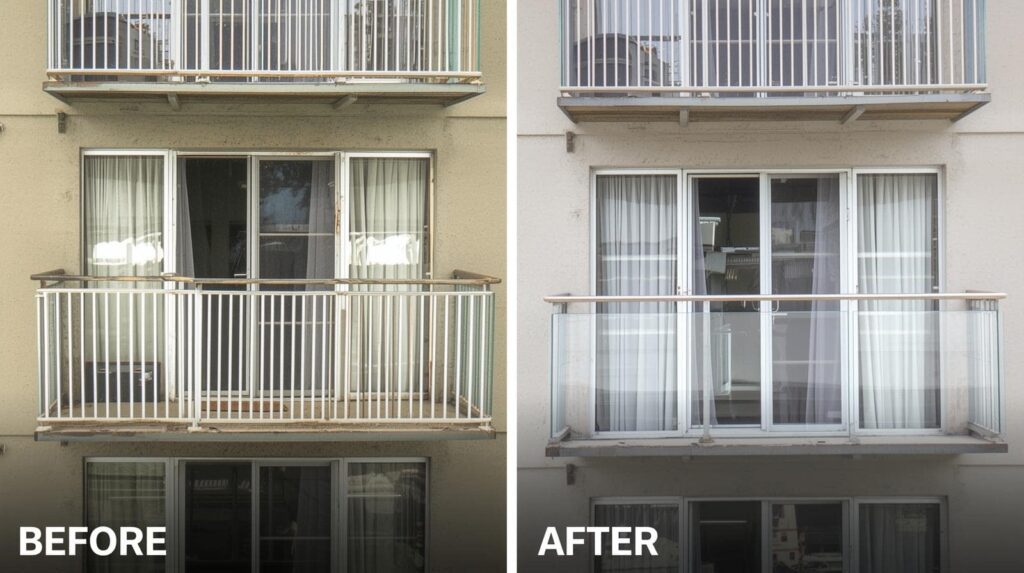
Surprised? I figure you’d be. But here’s what happened: a new incoming board decided they wanted brand new sliding glass doors, windows, and glass railings on the entire property. That decision alone added millions. On top of that, the concrete repair quantities were underestimated and the change orders piled up.

Here’s the silver lining: by the time the project finished, the building looked stunning. Its market value shot up, and residents were proud of their investment. The downside? HOA fees rose significantly, and some residents couldn’t afford to stay. It was a happy ending for the building, but not for everyone inside it.

Different Perspectives

Some in the industry argue that hidden conditions and underestimated quantities shouldn’t be excuses—that engineers should be able to predict everything upfront. But the reality is more complex. Even with destructive testing, corrosion can spread unpredictably, especially in coastal Florida where saltwater intrusion accelerates deterioration. Other critics claim that change orders are often “padding” by contractors. While there’s no denying that unethical practices exist, in most cases, change orders reflect legitimate shifts in scope or conditions. This is why having a trusted engineer oversee the process is so vital.

Bibliography

Source: American Concrete Institute (ACI 562-19). Code Requirements for Assessment, Repair, and Rehabilitation of Existing Concrete Structures.
Source: Associated General Contractors of America. Construction Inflation Alert. www.agc.org
Source: Florida Statutes, Chapter 718 & 720. Condominium and HOA laws regarding structural integrity reserves. www.leg.state.fl.us
Source: Florida Building Code, 2023 Edition.
Source: International Concrete Repair Institute (ICRI). Guidelines for Concrete Repair.

For additional information you can access the following:

  • Concrete International (www.concrete.org)
  • Florida Engineering Society (www.fleng.org)

In the Billion-Dollar Concrete Repair Business, Florida Is at the Center

Billion-Dollar Concrete Repair Business

Summary

Concrete repair isn’t just a maintenance task in Florida—it’s part of a billion-dollar industry that keeps engineers, contractors, and lawyers very busy. From salt and humidity eating away at steel to aging buildings now facing stricter post-Surfside laws, Florida sits at the center of concrete repairs. In this article, I’ll explain why our coastal environment makes us ground zero for spalling, what the new rules mean, and why fixing concrete is never just a matter of sprinkling some magic dust.

Why Florida is at the Center of this Billion-Dollar Industry

When people outside the Sunshine State think of Florida, they picture retirees, iguanas sunning themselves on rooftops, and hurricanes that make the Weather Channel anchors stand sideways in the wind. What they usually don’t think of is concrete repair. Yet here, concrete repair is as much a part of life as sunscreen and toll roads.

So why is this so prevalent in Florida? The answer comes down to three major villains and one very important new referee:

  • Salt and ocean air (chloride ions that love eating steel for breakfast).
  • Humidity and rain (moisture is like the gasoline on the fire).
  • Aging building stock (some of it more than 100 years old in places like South Beach).
  • Post-Surfside laws and regulations (the referee blowing the whistle harder than ever before).

Put these together and you have the perfect recipe for concrete spalling, multimillion-dollar repairs, and, in many cases, lawsuits when boards, residents, contractors, or owners try to cut corners.

(Source: Federal Highway Administration report on corrosion in reinforced concrete structures, 2013; FEMA coastal construction guidelines).

Salt, Humidity, and the Ocean: Florida’s Three Musketeers of Corrosion

Let’s start with our environment. Salt air is basically the “hiding stalker” of concrete deterioration—it sneaks in through microscopic pores, finds the reinforcing steel (rebar), and starts a corrosion party. When steel rusts, it expands, pushing out against the concrete cover. That’s when you see cracks, bulges, and chunks falling off your balcony.

Now, add Florida’s humidity into the mix. We don’t just get humid; we practically breathe soup for six months of the year. Moisture keeps the steel perpetually wet, which is exactly what corrosion needs to thrive. Pair that with common rainstorms and the occasional hurricane, and you’ve got conditions that would make even the best concrete tremble.

Finally, there’s the ocean. For seaside condos in Miami Beach, Hollywood, or Fort Lauderdale, salt spray acts like free delivery service for chloride ions. Even buildings that are set back from the beach still deal with wind-blown salt. The American Concrete Institute notes that coastal environments are some of the harshest for reinforced concrete, requiring special durability design (Source: American Concrete Institute, ACI 562-19).

It’s no wonder so many of my inspections feel like I’m walking into a CSI episode for concrete.

Aging Buildings: Florida’s Time Bombs

Miami-Dade and Broward counties are full of buildings that were thrown up during the condo boom of the 1960s and 1970s. Many of these are now 50+ years old, and some historic buildings in South Beach are over 100 years old and still in active use. According to the Miami-Dade County Property Appraiser’s data, nearly half of Miami Beach’s condo inventory was built before 1980 (Source: Miami-Dade County Property Appraiser).

That means tens of thousands of units are now at or past the age when significant structural repairs are unavoidable. If you own one of these buildings, congratulations—you basically own a classic car. It may look great from a distance, but under the hood the rust is spreading fast, and the mechanic (in this case, your engineer) is about to hand you a very large bill.

The truth is that aging reinforced concrete doesn’t just need cosmetic touch-ups. By the time spalling shows up on the surface, it usually means there’s a deeper structural issue brewing.

The New Laws After Surfside

On June 24, 2021, the Champlain Towers South collapsed in Surfside, killing 98 people. This tragedy shook the entire country and permanently changed the way Florida regulates building safety. The new laws passed in 2022 and updated in 2023 mandate stricter timelines and reserve funding requirements:

  • Milestone inspections are now required statewide for condos and co-ops three stories or higher.
  • Buildings must complete their first inspection at 30 years old, or 25 years old if located within three miles of the coast. After that, inspections repeat every 10 years.
  • Structural Integrity Reserve Studies (SIRS) are required so boards can no longer waive reserves for major structural elements. That means setting aside millions for future concrete repairs whether you like it or not.

(Source: Florida Statutes 553.899 and 718.112; Florida Building Commission updates).

These new regulations are like the state saying, “No more kicking the can down the road.” For boards, that means bracing residents for mandatory assessments. For engineers like me, it means a steady stream of inspection calls. For concrete contractors, it means business is booming—sometimes literally.

Table: Why Florida Is at the Epicenter of Concrete Repair

Here’s a breakdown of the major culprits that make Florida ground zero for concrete repair:

CulpritHow It Damages ConcreteImpact on Florida Buildings
Salt Air (Chlorides)Penetrates pores, corrodes reinforcing steelAccelerates spalling, especially near the coast
Humidity & RainKeeps concrete perpetually moistPromotes rust, mold, and weakens structural integrity
Ocean ProximityConstant exposure to salt spray and stormsHigher repair frequency for seaside condos
Aging Building StockMany condos 40+ years old (some 100+)Major repairs required for recertification
New Post-Surfside LawsMandated inspections & reserve studiesMulti-million dollar repair obligations

True Story to Learn From

Years ago, I was the engineer and contractor on a building in South Beach right on the ocean. Up to that point, it was the worst case of concrete deterioration I had ever seen. Balconies were crumbling, the garage looked like it had been used for target practice, and the rebar was so rusted I thought about bringing a tetanus shot just to walk the site.

I sat down with the Board and told them bluntly: “You’ve got two choices. Repair this building at great cost, or tear it down and start over.” Their jaws dropped. But here’s the kicker: tearing it down wasn’t really an option. The building was historic, and zoning laws had changed so much that a new structure wouldn’t have come close to matching the old one.

So, they bit the bullet and chose repairs. The project took nearly two years and cost almost as much as building a new tower. But when it was done, the building looked brand new, the units skyrocketed in value, and the owners had the peace of mind of knowing their building wasn’t about to join the Surfside cautionary tale.

The moral? Concrete repair isn’t optional in Florida. It’s survival.

Different Perspectives

I’ve actually heard people argue that concrete repairs are exaggerated by engineers and contractors looking for work. I’ve heard residents mutter under their breath during board meetings, “This is just a scam to line their pockets.” Others point to chemical products advertised as “miracle cures” that supposedly stop corrosion without the need for messy repairs.

Here’s the problem: the science doesn’t back those claims. The American Concrete Institute and the International Concrete Repair Institute are clear that once steel reinforcement is actively corroding, the only durable fix involves removing deteriorated concrete, cleaning the steel, and patching with repair mortar (Source: International Concrete Repair Institute Guidelines). Anything else is like putting a Band-Aid on a broken bone.  I would also say that Cathodic protection is also a very viable alternative (more on that in another article).

As for the suspicion about engineers? Trust me, I don’t get any joy from telling a group of retirees their maintenance fees are about to triple. It makes me about as popular as a mosquito at a barbecue. But ignoring the problem doesn’t make it cheaper—it only makes it worse.

Bibliography

Source: American Concrete Institute (ACI 562-19) – Code Requirements for Assessment, Repair, and Rehabilitation of Existing Concrete Structures
Source: International Concrete Repair Institute (ICRI) – Concrete Repair Guidelines
Source: Federal Highway Administration (FHWA) – Corrosion Costs and Preventive Strategies in the United States (FHWA-RD-01-156)
Source: FEMA – Coastal Construction Manual (FEMA P-55)
Source: Florida Statutes 553.899 and 718.112 – Milestone Inspections and Structural Integrity Reserve Studies
Source: Miami-Dade County Property Appraiser – Historical Building Stock Data

The Most Common Surprise in Condo Repairs: Cost Overruns & Change Orders

change order & law suit risk

Summary

Renovating or restoring a condo in South Florida can feel like opening a mystery box—you never know what you’re going to get. One of the biggest triggers of lawsuits in restoration projects isn’t necessarily bad workmanship or shady contractors, but good old-fashioned cost overruns and change orders. In this blog, I’ll explain why these issues are so common in concrete restoration, why engineers aren’t fortune-tellers, and what boards and property managers can do to minimize the fallout.

Why Cost Overruns Happen So Often in Concrete Repair

If you’ve ever been involved in a renovation or restoration project, you know this story: you start with one budget, and somewhere along the way, that budget explodes like a piñata filled with unexpected bills. In South Florida, lawsuits are practically a pastime when it comes to construction disputes, and concrete repair is a common culprit.

Why? Because unlike new construction, where you’re working with a clean slate, restoration means dealing with hidden conditions. Engineers don’t have X-ray vision (although I wish we did). What we see in our inspections is only the surface. Once work begins and contractors start chipping away at concrete, they might find steel so corroded it looks like rusted rebar spaghetti, or wood supports where there should have been reinforced concrete.

Let’s compare:

  • New construction surprises usually mean soil conditions or underground utilities. Those can be bad, but at least we usually have soil borings and utility maps to guide us.
  • Restoration surprises mean everything hidden behind walls, under slabs, or inside columns. These are often discovered only once the jackhammers start pounding.

When the budget jumps, people get angry—understandably so. The owners or board members are footing the bill, and nobody enjoys unexpected costs that hit the pocketbook. But the reality is, in restoration, the risk of these hidden conditions is sky-high compared to other types of construction.

And once lawyers get involved—and they often do—contracts get tested, blame gets tossed around, and suddenly the engineer, the contractor, and the project manager are all wearing bullseyes on their backs.  I’m reiterating here that lawyers are not a bad thing.

The Top 3 Causes of Overruns and Change Orders

1. Hidden Conditions

This is the number one reason costs balloon. In concrete restoration, we engineers inspect, tap, and test, but we can’t see every crack that lurks beneath the surface. Spalling (that cancer-like process of concrete breaking away from rusting rebar inside) grows geometrically over time. A small patch visible today could mean a much larger patch lurking behind it.

When bidding, contractors use the quantities shown in the engineer’s plans. But if once the work begins, the actual spalls are far more extensive, the cost skyrockets. Boards and managers should plan ahead by adding a contingency (often 15–20%) to the budget to account for hidden conditions. It won’t stop the surprise, but at least you’ll be financially better prepared.

2. Underestimated Quantities

This one is related to hidden conditions but slightly different. Quantities of repair are based on inspections that are inherently limited. Engineers try their best with sounding, coring, and other testing methods, but we can only probe so much before the building starts looking like Swiss cheese.

Underestimation doesn’t mean engineers are careless—it’s simply the nature of the beast. If we call out 1,000 square feet of spalling and once the job starts it’s 2,500, that’s not fraud; it’s just reality. One way to minimize the sting is to do more thorough pre-bid investigations and destructive testing, though that costs more upfront. It’s a trade-off that boards need to carefully consider.

3. Change Orders

Change orders are the sworn enemy of every board treasurer. They often go hand-in-hand with underestimated quantities but can also arise for entirely different reasons. For example, during a concrete repair job, a new board might decide to replace all the windows or install new sliding glass doors. Suddenly, the contract balloons because the scope of work has changed.

Not all change orders are bad. Sometimes they’re necessary to comply with updated codes or to address issues uncovered mid-project. But when they’re avoidable (like deciding halfway through to upgrade all the glass railings), they’re costly and disruptive. The best mitigation? Lock down the scope of work before the project starts and resist the temptation to add shiny extras in the middle of construction.

Honorable Mentions

  • Material escalation: Tariffs, supply chain issues, and inflation have driven up costs of steel, concrete, and aluminum significantly.
  • Contractor performance: Concrete repair is specialized, and skilled crews are limited. Poor workmanship or slow production can drive costs up even more.

What Can Be Done to Minimize Cost Overruns?

Here’s what I recommend:

  • Budget for contingencies: Boards should always set aside 15–20% for hidden conditions.
  • Invest in detailed pre-bid inspections: Spending a little more upfront for testing may save you from massive surprises later.
  • Lock down the scope early: Avoid scope creep by finalizing all big decisions (windows, railings, etc.) before bidding.
  • Communicate clearly: When surprises arise, explain them transparently to owners. Anger often comes from not understanding why something happened.

And remember: I’ve been part of hundreds of projects over the years. Breaking the bad news to boards is never fun. My heart goes out to volunteer board members who take on this mostly thankless job—until big-money issues surface. That’s when friendships and neighborly goodwill can evaporate, sometimes leading to lawsuits.

True Story to Learn From

Several years ago, I worked on an 18-story beachfront condo in South Florida. It was your typical reinforced concrete building with countless balconies. Midway through the project, the owner decided to buy new sliding glass doors for all the units. Seemed simple enough.

But when we did the mockup, we discovered something bizarre: decades ago, someone had installed false columns made of wood to hold the sliding doors in place. Yes, wood. On a high-rise. Facing the ocean.

According to the Notice of Acceptance (NOA)—that’s the approval document Miami-Dade and Broward use to certify that products meet hurricane and building code standards—sliding glass doors on a high-rise in South Florida should be attached to concrete. The solution? Tear out all the fake wood columns and replace them with formed and poured concrete columns. Incredibly expensive.

Could someone have sued me for not spotting this earlier? Possibly. But the glass doors weren’t even part of the original contract; they were added later. The bigger lesson was this: scope out the job thoroughly at the beginning, because every surprise down the line adds cost, frustration, and risk.

Different Perspectives

Some argue that contractors or engineers should guarantee quantities upfront, absorbing the financial risk of hidden conditions. While this sounds attractive to boards and owners, in practice it doesn’t work. No engineer can predict the full extent of spalling without fully demolishing the structure beforehand—which defeats the purpose. Contractors who take on too much risk will pad their bids heavily, meaning you’ll pay more from the start.

Others claim that change orders are just profit-padding. While bad actors exist in every industry, most legitimate change orders come from real, unforeseen issues. Dismissing all change orders as scams risks jeopardizing the safety and compliance of the project.

Bibliography

Source: American Concrete Institute (ACI 562-19), Code Requirements for Assessment, Repair, and Rehabilitation of Existing Concrete Structures.
Source: Florida Building Code, 8th Edition, Existing Building provisions.
Source: Florida Statutes Chapter 558, Construction Defects.
Source: Miami Herald coverage of Surfside and subsequent building safety regulations.
Source: U.S. Bureau of Labor Statistics, Producer Price Index for construction materials.

For additional information you can access the following:

Concrete International Magazine (ACI) – www.concrete.org

Engineering News-Record (ENR) – www.enr.com

Article Duplicate

ancient roman sculpture

Summary

Renovating or restoring a condo in South Florida can feel like opening a mystery box—you never know what you’re going to get. One of the biggest triggers of lawsuits in restoration projects isn’t necessarily bad workmanship or shady contractors, but good old-fashioned cost overruns and change orders. In this blog, I’ll explain why these issues are so common in concrete restoration, why engineers aren’t fortune-tellers, and what boards and property managers can do to minimize the fallout.

Why Cost Overruns Happen So Often in Concrete Repair

If you’ve ever been involved in a renovation or restoration project, you know this story: you start with one budget, and somewhere along the way, that budget explodes like a piñata filled with unexpected bills. In South Florida, lawsuits are practically a pastime when it comes to construction disputes, and concrete repair is a common culprit.

Why? Because unlike new construction, where you’re working with a clean slate, restoration means dealing with hidden conditions. Engineers don’t have X-ray vision (although I wish we did). What we see in our inspections is only the surface. Once work begins and contractors start chipping away at concrete, they might find steel so corroded it looks like rusted rebar spaghetti, or wood supports where there should have been reinforced concrete.

Let’s compare:

  • New construction surprises usually mean soil conditions or underground utilities. Those can be bad, but at least we usually have soil borings and utility maps to guide us.
  • Restoration surprises mean everything hidden behind walls, under slabs, or inside columns. These are often discovered only once the jackhammers start pounding.

When the budget jumps, people get angry—understandably so. The owners or board members are footing the bill, and nobody enjoys unexpected costs that hit the pocketbook. But the reality is, in restoration, the risk of these hidden conditions is sky-high compared to other types of construction.

And once lawyers get involved—and they often do—contracts get tested, blame gets tossed around, and suddenly the engineer, the contractor, and the project manager are all wearing bullseyes on their backs.  I’m reiterating here that lawyers are not a bad thing.

The Top 3 Causes of Overruns and Change Orders

1. Hidden Conditions

This is the number one reason costs balloon. In concrete restoration, we engineers inspect, tap, and test, but we can’t see every crack that lurks beneath the surface. Spalling (that cancer-like process of concrete breaking away from rusting rebar inside) grows geometrically over time. A small patch visible today could mean a much larger patch lurking behind it.

When bidding, contractors use the quantities shown in the engineer’s plans. But if once the work begins, the actual spalls are far more extensive, the cost skyrockets. Boards and managers should plan ahead by adding a contingency (often 15–20%) to the budget to account for hidden conditions. It won’t stop the surprise, but at least you’ll be financially better prepared.

2. Underestimated Quantities

This one is related to hidden conditions but slightly different. Quantities of repair are based on inspections that are inherently limited. Engineers try their best with sounding, coring, and other testing methods, but we can only probe so much before the building starts looking like Swiss cheese.

Underestimation doesn’t mean engineers are careless—it’s simply the nature of the beast. If we call out 1,000 square feet of spalling and once the job starts it’s 2,500, that’s not fraud; it’s just reality. One way to minimize the sting is to do more thorough pre-bid investigations and destructive testing, though that costs more upfront. It’s a trade-off that boards need to carefully consider.

3. Change Orders

Change orders are the sworn enemy of every board treasurer. They often go hand-in-hand with underestimated quantities but can also arise for entirely different reasons. For example, during a concrete repair job, a new board might decide to replace all the windows or install new sliding glass doors. Suddenly, the contract balloons because the scope of work has changed.

Not all change orders are bad. Sometimes they’re necessary to comply with updated codes or to address issues uncovered mid-project. But when they’re avoidable (like deciding halfway through to upgrade all the glass railings), they’re costly and disruptive. The best mitigation? Lock down the scope of work before the project starts and resist the temptation to add shiny extras in the middle of construction.

Honorable Mentions

  • Material escalation: Tariffs, supply chain issues, and inflation have driven up costs of steel, concrete, and aluminum significantly.
  • Contractor performance: Concrete repair is specialized, and skilled crews are limited. Poor workmanship or slow production can drive costs up even more.

What Can Be Done to Minimize Cost Overruns?

Here’s what I recommend:

  • Budget for contingencies: Boards should always set aside 15–20% for hidden conditions.
  • Invest in detailed pre-bid inspections: Spending a little more upfront for testing may save you from massive surprises later.
  • Lock down the scope early: Avoid scope creep by finalizing all big decisions (windows, railings, etc.) before bidding.
  • Communicate clearly: When surprises arise, explain them transparently to owners. Anger often comes from not understanding why something happened.

And remember: I’ve been part of hundreds of projects over the years. Breaking the bad news to boards is never fun. My heart goes out to volunteer board members who take on this mostly thankless job—until big-money issues surface. That’s when friendships and neighborly goodwill can evaporate, sometimes leading to lawsuits.

True Story to Learn From

Several years ago, I worked on an 18-story beachfront condo in South Florida. It was your typical reinforced concrete building with countless balconies. Midway through the project, the owner decided to buy new sliding glass doors for all the units. Seemed simple enough.

But when we did the mockup, we discovered something bizarre: decades ago, someone had installed false columns made of wood to hold the sliding doors in place. Yes, wood. On a high-rise. Facing the ocean.

According to the Notice of Acceptance (NOA)—that’s the approval document Miami-Dade and Broward use to certify that products meet hurricane and building code standards—sliding glass doors on a high-rise in South Florida should be attached to concrete. The solution? Tear out all the fake wood columns and replace them with formed and poured concrete columns. Incredibly expensive.

Could someone have sued me for not spotting this earlier? Possibly. But the glass doors weren’t even part of the original contract; they were added later. The bigger lesson was this: scope out the job thoroughly at the beginning, because every surprise down the line adds cost, frustration, and risk.

Different Perspectives

Some argue that contractors or engineers should guarantee quantities upfront, absorbing the financial risk of hidden conditions. While this sounds attractive to boards and owners, in practice it doesn’t work. No engineer can predict the full extent of spalling without fully demolishing the structure beforehand—which defeats the purpose. Contractors who take on too much risk will pad their bids heavily, meaning you’ll pay more from the start.

Others claim that change orders are just profit-padding. While bad actors exist in every industry, most legitimate change orders come from real, unforeseen issues. Dismissing all change orders as scams risks jeopardizing the safety and compliance of the project.

Bibliography

Source: American Concrete Institute (ACI 562-19), Code Requirements for Assessment, Repair, and Rehabilitation of Existing Concrete Structures.
Source: Florida Building Code, 8th Edition, Existing Building provisions.
Source: Florida Statutes Chapter 558, Construction Defects.
Source: Miami Herald coverage of Surfside and subsequent building safety regulations.
Source: U.S. Bureau of Labor Statistics, Producer Price Index for construction materials.

For additional information you can access the following:

Concrete International Magazine (ACI) – www.concrete.org

Engineering News-Record (ENR) – www.enr.com

Why Post-Tension Cables in Buildings Can Be Dangerous

POST-TENSION-CABLES

Summary

If you’ve ever lived in or managed a concrete building in Florida, you’ve probably heard the term post-tension cables. These powerful steel strands give strength to concrete slabs, but they can also pose serious dangers if neglected or damaged. In this blog, I’ll explain what post-tension cables are, why engineers use them, and the risks they carry. I’ll also share a true story from a South Florida building where a corroded cable snapped in the middle of the night — and what happened next.

What Are Post-Tension Cables?

Let’s start simple. Concrete is strong in compression (it can hold up a car without flinching), but weak in tension (pull it apart, and it cracks faster than a fortune cookie). Engineers solved this problem with reinforcement — first with rebar, and then with post-tension cables.

Definition

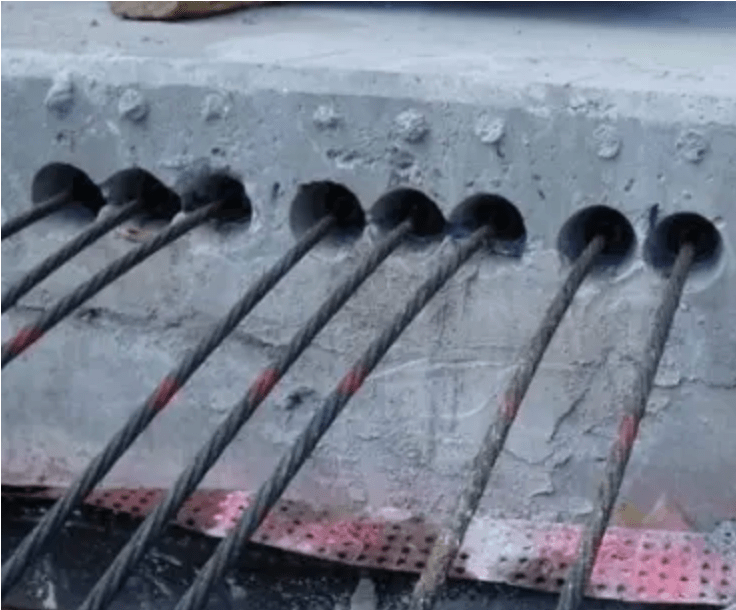
Post-tension cables are bundles of high-strength steel strands that run through ducts in concrete slabs. After the concrete hardens, the strands are tensioned (stretched tight) and anchored at their ends in stressing pockets. The result? A slab that can carry much heavier loads and span longer distances than regular reinforced concrete.

Visualizing It

Imagine a stretched rubber band held tight between your fingers. The rubber band wants to pull your fingers together, and that “pre-load” keeps the system firm. Post-tensioning works the same way — except instead of your fingers, it’s thousands of pounds of concrete.

A typical post-tension system includes:

  • The Strand: The steel cable itself.
  • The Duct: A sleeve or path inside the slab where the strand sits.
  • The Anchorage/Stressing Pocket: The end location where the strand is tightened and secured.

Why Engineers Use Them

So why bother with these steel “guitar strings” inside a building?

  • Longer spans: Great for parking garages, bridges, and condos without forest-like columns.
  • Thinner slabs: Saves material and cost.
  • Crack control: Reduces shrinkage cracks in concrete.
  • Stronger structures: Helps resist heavy live loads like vehicles or crowds.

In South Florida, where developers love wide-open parking garages and open floorplans, post-tension is practically everywhere particularly in newer buildings.

Why Post-Tension Cables Can Be Dangerous

Here’s the catch: a post-tension cable is a loaded spring hiding in your ceiling.

The Risks

  • Sudden Failure: If a strand snaps, it releases stored energy violently. That’s the loud “bang” residents sometimes hear.
  • Concrete Damage: The cable can punch through slabs, spall concrete, or drop debris.
  • Corrosion: Florida’s salty air and high humidity corrode steel fast. Rust at the stressing pocket can eventually cause strand failure (ACI 423.7R-05).
  • Accidental Cuts: Contractors drilling into slabs without scanning first can cut a cable. The result? Expensive repairs, dangerous recoil, and liability headaches.

Who Should Be Careful

  • Homeowners/Residents: Report rust stains, cracks near stressing pockets, or unexplained bangs.
  • Property Managers: Schedule regular inspections and preventative maintenance.
  • Engineers/Contractors: Always scan for post-tension cables before coring or drilling.
  • Everyone: Never assume “that little rust spot” is harmless.

True Story to Learn From

One night in a coastal South Florida city, a condo resident woke up to a loud bang in his living room. Startled, he ran out to find chunks of concrete on the floor. Even worse, a steel cable was sticking out of his ceiling.

When I arrived, I knew exactly what I was looking at: a broken post-tension strand.

At first, we suspected someone might have been drilling through the slab above. But after inspection, we realized the truth. The end of the cable at the stressing pocket had corroded, weakened by years of salt exposure. Rust stains had been visible on the outside of the building, but nobody acted on them. Eventually, the steel gave way, and the strand snapped under pressure.

The condo board brought me in to investigate further. What we found was sobering: not just one bad cable, but around 50 others with corrosion issues. We were hired to analyze, design, repair and replace them.

Thankfully, this story had a happy ending. The building was stabilized, residents were safe, and management finally understood the importance of proactive maintenance. But the situation could have been much worse — imagine if that failure had happened in a crowded living room or during a holiday gathering.

How to Spot and Prevent Problems

Signs of Trouble:

  • Rust stains near slab edges or stressing pockets.
  • Loud bangs followed by concrete cracks.
  • Unexplained ceiling cracks or spalling.
  • Exposed steel visible on the slab exterior.

Precautions:

  • Schedule regular inspections by licensed engineers.
  • Use ground-penetrating radar (GPR) before drilling into any slab.
  • Seal stressing pockets and protect exposed ends from saltwater intrusion.
  • Educate residents to report strange noises or cracks immediately.

Different Perspectives

Some contractors argue that post-tension cables are “perfectly safe” if installed correctly and maintained. And in many cases, they are. But in Florida’s coastal environment, the real enemy is time + salt air.

Others claim that simple patching of cracks near stressing pockets is sufficient. Unfortunately, research shows that once corrosion begins, it can progress rapidly inside the anchorage (Federal Highway Administration, FHWA, 2018). Ignoring it just delays the inevitable. The truth lies in the middle: post-tension cables are powerful tools when respected, inspected, and protected. But neglect them, and they become hazards hiding in plain sight.

ComponentDescriptionVisual Analogy
StrandHigh-strength steel cable that is tensioned to reinforce the slabLike the string of a guitar pulled tight
DuctSleeve or pathway in which the strand sits inside the concreteLike a straw guiding the string through the concrete
Anchorage / Stressing PocketThe end location where the strand is stressed (tightened) and securedLike the tuning peg of the guitar holding the string
Concrete SlabThe hardened concrete that holds the post-tension system in placeLike the guitar body keeping everything together

Why Roofing Is the Most Dangerous Job in Construction

roofers-in-fall-protection

Summary

Roofing may look straightforward — lay down materials, keep the rain out. But it’s actually the most dangerous job in construction. Falls account for the largest portion of roofing-related deaths, and many of these happen because workers aren’t properly tied off or because of simple slips. OSHA has strict rules to help reduce these accidents, but in Florida and beyond, too many tragedies still occur when those rules are ignored.

The Reality of Roofing Risks

When most people think of dangerous jobs, they picture firefighters or deep-sea divers. But according to the U.S. Bureau of Labor Statistics, roofing has one of the highest fatal injury rates of any construction trade (BLS, 2022).

The reasons are obvious once you think about it:

  • Roofers work at height almost every day.
  • Roofers work with hot asphalt and other toxic chemicals and fumes.
  • Surfaces are often sloped and slick with morning dew or rain.
  • Florida’s strong winds and unpredictable storms only make matters worse.
  • And sometimes, workers skip safety measures to save time — a shortcut that can turn deadly.

The Occupational Safety and Health Administration (OSHA) estimates that falls account for more than one-third of all construction deaths (OSHA, 2023). For roofers, falls make up the overwhelming majority of fatalities.

How Falls Happen

Falls don’t always come from dramatic mistakes. More often, they happen because of ordinary oversights:

  • Not being tied off: Workers failing to use harnesses or lanyards.
  • Unprotected edges: Missing guardrails or incomplete parapets.
  • Slips and trips: Loose gravel, wet surfaces, or clutter left behind.
  • Swinging loads: Cranes and hoists can swing unexpectedly in high winds.
  • Improper ladder use: Falls don’t always happen on the roof — ladders are a major hazard.

In South Florida, where weather changes fast, sudden gusts of wind or afternoon rain showers only raise the stakes.

OSHA’s Rules for Roofing Safety

OSHA has strict standards to prevent falls, many of which are basic common sense:

  • Fall Protection: Harnesses, lifelines, and anchor points must be provided and used.
  • Guardrails: Required at roof edges and openings.
  • Safety Nets: Used when guardrails or harnesses aren’t practical.
  • Training: Workers must be trained to recognize fall hazards.
  • Housekeeping: Roof surfaces must be kept clear of debris and materials.

OSHA’s motto is simple: “Plan, provide, train.” Plan ahead for safety, provide the right equipment, and train workers to use it.

And yet — despite these rules being clear and widely published — roofing still tops the list for fatal accidents.

True Story to Learn From

Let me take you back many years to a high-rise project in Puerto Rico.

I was working as an assistant superintendent. The building was still under construction, and the parapets at the roofline weren’t fully installed yet. That meant there were open sections — holes where, if someone wasn’t careful, they could fall right through.

That morning, the tower crane was lifting roofing materials up to the crew. A gust of wind blew through, and the load on the crane began to sway. One of the bundles swung just enough to hit a roofer standing near the opening in the parapet.

He wasn’t tied off.

In an instant, he was knocked off balance and fell through the gap. Twelve stories down. He didn’t survive.

It was one of the most terrible days of my career. Not only because of the loss itself, but because the accident was preventable. Later, we had to face the unbearable task of speaking with his family — telling them that he hadn’t been properly tied off, and that if he had been, he would still be alive.

To this day, that memory reminds me why fall protection rules matter. They aren’t just checkboxes for compliance — they’re the difference between going home at the end of the day or never seeing your family again.

Preventing Roofing Deaths: Best Practices

Roofing doesn’t have to be deadly. When safety rules are enforced, accidents plummet. Here are the key measures every contractor in Florida (and beyond) should follow:

  • Always tie off: No exceptions. Harnesses save lives.
  • Secure parapets and guardrails: Don’t leave gaps where workers can fall.
  • Plan around weather: Florida storms and gusts make crane work especially risky.
  • Inspect equipment daily: Harnesses, lanyards, and anchors wear out over time.
  • Supervision matters: Foremen and supers must enforce safety rules, even if it slows production.
  • Training new workers: Many accidents involve new or untrained roofers.

Florida contractors know OSHA will come down hard on violations — fines are steep, but the real cost is human life.

Different Perspectives

Some contractors argue that OSHA’s fall protection rules are too strict or slow down productivity. But the data says otherwise: companies with strong safety programs often see fewer delays and lower insurance costs (OSHA, 2023).

Others believe “experienced” roofers don’t need constant supervision. Unfortunately, experience doesn’t prevent accidents. In fact, seasoned workers sometimes cut corners because they feel invincible. The tragedy I witnessed in Puerto Rico was proof: a single missed safety step can turn deadly in seconds.

The bottom line: there’s no trade-off between safety and productivity. A dead worker stops the job longer than any safety harness ever will.

OSHA Fall Protection RequirementCommon Cause of Roofing Falls
Use of personal fall arrest systems (harness, lanyard, anchor point)Worker not tied off or harness not used correctly
Guardrails or safety nets at roof edges and openingsUnprotected parapet gaps or missing guardrails
Proper ladder use and secure footingLadders slipping or being used improperly
Training workers to recognize fall hazardsInexperienced or untrained workers on roof
Housekeeping – keeping roof surfaces clear of debrisLoose materials, clutter, or slippery surfaces

The Hidden Dangers of Cast Iron Plumbing in Old Florida Buildings

cast-iron-pipe-interior-scaling

Summary

Cast iron plumbing was once considered the gold standard in building construction. Today, in Florida’s aging high-rises and coastal properties, it’s a ticking time bomb. In this blog, I’ll explain how cast iron became so common, why it fails so badly in our climate, how professionals inspect it, and the options for repair or replacement. I’ll also share a real story from a 15-story building I inspected — a story that left the condo board both shocked and considerably lighter in the wallet.

The Origins of Cast Iron Plumbing

Cast iron pipes were first installed in American buildings as early as the 1800s. By the mid-20th century, they were everywhere — prized for their strength, fire resistance, and supposed longevity. Builders were convinced they would last 75–100 years.

That sounded great on paper. But the engineers and builders of 1950s Miami Beach weren’t counting on the brutal Florida environment: salty air, constant humidity, and rising groundwater. Add in the cleaning chemicals residents send down their drains, and those “lifetime” pipes often fail in less than 50 years (National Association of Home Builders, 2018).

The reality is this: cast iron is like the strong uncle at the family barbecue — looks tough, but put him in Florida heat and humidity for a few decades, and he’ll crumble faster than the potato salad left in the sun.

Why Cast Iron Fails So Badly in Florida

Rust is the enemy. When iron comes into contact with oxygen and water — and remember, in Florida, water is everywhere — it corrodes. Over time, rust eats away at the interior walls of the pipe, narrowing the flow, weakening the structure, and eventually creating holes.

And the symptoms? They’re as delightful as you’d expect:

  • Bad smells that no amount of air freshener can cover.
  • Slow drains that make you question whether your plunger is conspiring against you.
  • Leaks inside walls or ceilings, often discovered only after major damage has occurred.
  • Sewage backups — the kind that quickly ruin a kitchen remodel or, worse, a neighbor’s new white carpet.

In fact, a study by the International Association of Certified Home Inspectors (InterNACHI, 2021) noted that cast iron piping in humid regions like Florida may show “serious failure” in as little as 40 years. That’s a terrifyingly short lifespan for systems installed in the 1960s and 70s.

How Cast Iron Pipes Are Inspected

Inspecting cast iron is part science, part detective work. Here’s how it usually goes:

  1. Visual Inspections:
    Technicians look for visible leaks, staining on walls, or suspicious odors. Unfortunately, much of the piping in a high-rise is hidden, so visual checks only catch surface-level issues.
  2. Cameras:
    A small camera is sent through the pipes. Think of it like a colonoscopy for your building. This shows corrosion, cracks, and buildup on the inside walls of the pipes.
  3. Sounding Tests:
    Tapping along the pipe with a hammer can reveal hollow or thin spots. A healthy pipe rings like a bell. A rotten one thuds like a wet sponge.
  4. Moisture & Thermal Imaging:
    Advanced inspections may use infrared cameras to detect moisture behind walls, helping to pinpoint leaks before opening them up.

Repair Options: Lining vs. Replacement

Once you find failing cast iron, you have two main choices:

  • Pipe Lining:
    This method inserts a resin or epoxy liner inside the old pipe. It seals cracks and creates a smooth interior surface. It’s less disruptive but not always permanent. And if the original pipe is too far gone, lining won’t work.
  • Replacement with PVC:
    PVC (polyvinyl chloride) is today’s gold standard. It doesn’t rust, it resists chemicals, and it can last 100 years or more. The downside? Replacement often requires opening walls and ceilings, creating disruption and cost. But when done right, it eliminates the problem for good.

Many South Florida high-rises face the painful choice: spend less now with lining and risk future failures, or bite the bullet and replace everything with PVC. Boards that choose the “cheap fix” often call me back a few years later — usually when another surprise leak floods a unit.

True Story to Learn From

Let me take you to a 15-story condo on the coast of Fort Lauderdale. The call came in on a Tuesday morning: “Greg, we have a leak. No one can figure out where it’s coming from.”

Leaks are like ghosts. You hear them, you see the signs, but you can’t quite track them down. In this case, the unit owner had water stains on their ceiling, and the hallway smelled like something had crawled in the walls and died.

When I arrived, the board was frustrated — they’d already called a plumber who shrugged and said, “Could be anywhere.” That’s not what you want to hear when water is creeping into your drywall.

We brought in moisture meters, sniffed around like bloodhounds, and finally I told the board: “We’re going to have to open this up.” That’s always the part no one wants to hear, because it means drywall dust, angry tenants, and the sound of saws buzzing through walls.

Sure enough, when we cut open the wall around one of the plumbing risers, there it was: an entire section of cast iron pipe had completely rotted out. I’m talking a gaping hole you could practically put your hand through. The stench was overwhelming — years of sewage gases slowly escaping. No candle in the world could cover that up.

The board president turned pale. “How long has it been like this?” he asked. I told him, probably years — the pipe had been rusting from the inside out until it simply gave way.

The cost to fix it? Let’s just say it wasn’t pocket change. We had to replace the entire riser serving multiple units, which meant carefully opening walls up and down several floors. Tenants had to live with temporary plumbing outages and, yes, some colorful language was exchanged in the hallways.

By the time the job was done, the board had spent a small fortune. But at least they no longer had mysterious leaks and hallways that smelled like a sewer. The lesson? Ignoring cast iron plumbing doesn’t save money. It multiplies the bill later.

Different Perspectives

Some contractors argue that cast iron “can last 100 years” if properly maintained. While technically true in drier regions, Florida’s environment tells a different story. According to the Florida Department of Health (2020), cast iron here deteriorates far faster due to salt and humidity.

Others advocate for spot repairs only — patching leaks as they occur. The problem is, once one section fails, the rest is usually not far behind. It’s like fixing a flat tire on a car with bald tread — you’ll be back on the side of I-95 in no time.

That’s why most building engineers and plumbing experts now recommend comprehensive replacement with PVC, even though it’s disruptive. It’s the only long-term solution that avoids endless cycles of leaks and repairs.

AspectPipe LiningReplacement with PVC
DurabilityModerate – depends on condition of existing cast ironHigh – PVC resists corrosion and chemicals
DisruptionMinimal – no need to open walls extensivelyHigh – requires opening walls and ceilings
CostLower upfront costHigher upfront cost
SuitabilityBest for pipes with mild to moderate corrosionBest for pipes with severe corrosion or failure
Typical Lifespan10–20 years (depending on environment)50–100 years