
Summary
Not all cracks are created equal. Some are harmless cosmetic blemishes, while others can signal serious structural issues. In this blog, I’ll walk you through the different types of cracks, how engineers evaluate them, and why certain patterns — like punching shear cracks — can pose real dangers. I’ll also share a true story from a multi-story parking garage in South Florida where a few “harmless-looking” cracks turned out to be something far more serious.
Why Cracks Happen in Buildings
Let’s start with the obvious: all buildings crack. Concrete shrinks as it cures, temperature swings make materials expand and contract, and Florida humidity does things to concrete that even seasoned engineers wish it wouldn’t.
Cracks can come from:
- Shrinkage: Hairline cracks often form as concrete cures. They’re usually shallow and cosmetic.
- Settlement: If the soil under a building shifts, it can cause uneven stress and cracks. Florida’s sandy soil and high water table don’t always play nice.
- Overloading: Put too much weight on a slab or a column, and cracks appear like wrinkles after a stressful week.
- Structural Weakness: This is where things get serious — cracks radiating out from columns or wide, deep cracks in slabs can be a sign of major stress.
Not every crack means danger, but the ones that do often follow recognizable patterns.
Harmless vs. Dangerous Cracks
The trick is knowing which is which.
Harmless Cracks
- Hairline cracks in plaster or stucco.
- Thin, straight shrinkage cracks in slabs.
- Small cracks (less than 1/16 inch) that don’t change over time.
These are usually cosmetic — annoying but not threatening. A little patch and paint, and you’re back in business.
Potentially Dangerous Cracks
- Diagonal cracks across beams or walls.
- Wide cracks (greater than 1/8 inch) that keep growing.
- Radiating cracks from the base of columns or around slab-column joints (possible punching shear).
- Rust-stained cracks, which suggest corroding rebar inside.
In Florida, where salt-laden air accelerates corrosion, cracks that show rust streaks are especially concerning (American Concrete Institute (ACI 224R-01)).
Think of it like this: a crack is the building trying to tell you something. The question is whether it’s whispering (“Don’t worry, I’m just settling”) or screaming (“Help, I’m failing!”).
How Engineers Inspect Cracks
When I get a call about cracks, here’s how the inspection usually unfolds:
- Visual Inspection:
We measure crack width, length, and pattern. Cracks that radiate outward from a column or spread like spiderwebs often raise red flags. - Monitoring:
We sometimes install crack gauges or take photos to track whether cracks are moving or widening over time. - Structural Modeling:
For serious cases, we model the building in software like ETABS or SAFE. This helps simulate the loads and identify whether the cracks are related to punching shear, flexural stresses, or settlement. - Core Samples & Testing:
In extreme situations, concrete samples are taken for lab testing to see if there’s deeper deterioration. - Florida-Specific Checks:
Coastal structures may suffer chloride intrusion, which corrodes rebar. In those cases, cracks aren’t just surface blemishes — they’re highways for saltwater straight to the steel.
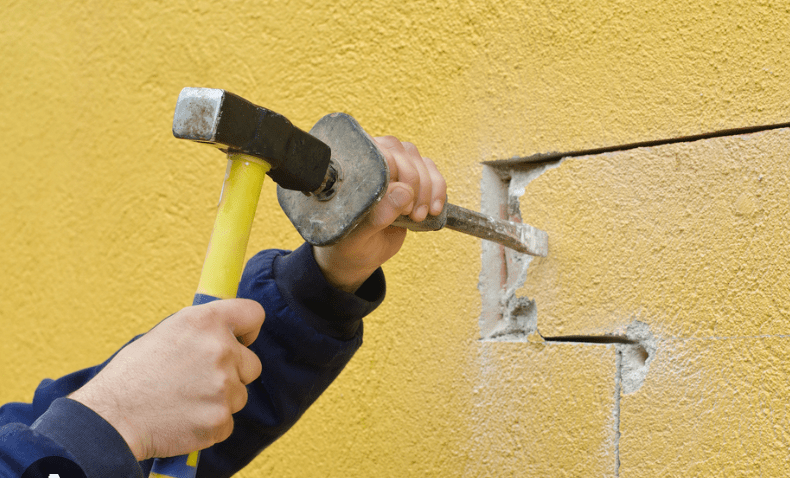
Repair & Reinforcement Options
Once dangerous cracks are identified, engineers recommend solutions depending on severity:
- Epoxy Injection: For small but significant cracks, epoxy can restore strength by bonding the concrete together.
- Structural Reinforcement: Adding drop panels, steel plates, or jackets to strengthen overstressed columns or slabs.
- Replacement: In extreme cases, demolishing and recasting the affected portion of the structure.
In Florida, we often choose reinforcement plus waterproofing to protect against future salt and humidity damage.
True Story to Learn From
Let me take you to a multi-story parking garage in a coastal South Florida city.
A condo board called me after residents noticed long, narrow cracks radiating outward from the base of several columns in the garage. At first glance, they seemed harmless — hairline thin, no spalling, no rust. Some board members shrugged it off, suggesting a little patching and paint.
But when I walked the garage floor, alarm bells went off in my head. These weren’t just random cracks. They were radiating outward from the columns like spokes on a wheel — classic signs of punching shear.
Punching shear occurs when the slab around a column is overstressed, and the cracks radiate out like the lines on a shattered dinner plate. If left unchecked, this kind of failure can be catastrophic.
I told the board, “We need to take a closer look. This isn’t just cosmetic.”
We modeled the garage in structural software to simulate the loads. Sure enough, the analysis showed that three of the columns were carrying more stress than they should. Without reinforcement, those cracks could have worsened and led to a serious safety hazard.
The solution? We reinforced those critical columns with drop panels — thickened slabs around the column heads designed to spread the load and reduce stress. Once installed, the cracks stopped progressing, and the structure was safe again.
The board president admitted later: “We thought you were exaggerating at first. But if we’d ignored this, who knows what could have happened.”
This story had a happy ending — but only because the cracks were recognized for what they were: warnings, not blemishes.
Different Perspectives
Some contractors argue that all hairline cracks are harmless and don’t require engineering evaluation. While that may be true for shrinkage cracks in a driveway, it’s not true for structural cracks in slabs and columns. Research by the Federal Highway Administration shows that crack patterns can be a reliable indicator of structural stress and deterioration (FHWA, 2019).
Others say that visual inspections are enough and software modeling is “overkill.” But in practice, modeling can uncover stress concentrations invisible to the naked eye. In the parking garage case, modeling was the key to discovering which columns needed reinforcement and which were safe. Without it, repairs might have been misdirected or delayed.
See the table below for a Harmless versus Dangerous Cracks comparison table.
| Aspect | Harmless Cracks | Dangerous Cracks |
| Appearance | Hairline, straight or shallow surface marks | Diagonal, wide, or radiating from columns/slabs |
| Location | Plaster, stucco, or non-structural concrete surfaces | Structural members (columns, beams, slabs, parking garages) |
| Width | < 1/16 inch (1.5 mm) | > 1/8 inch (3 mm) or widening |
| Progression | Stable, do not grow over time | Expanding or multiplying with time |
| Risk Level | Low – usually cosmetic only | High – may indicate serious structural stress or failure |